1X reveals Neo robot hand design ahead of consumer humanoid launch
English translation from Unibot. Source published 2026-06-04.
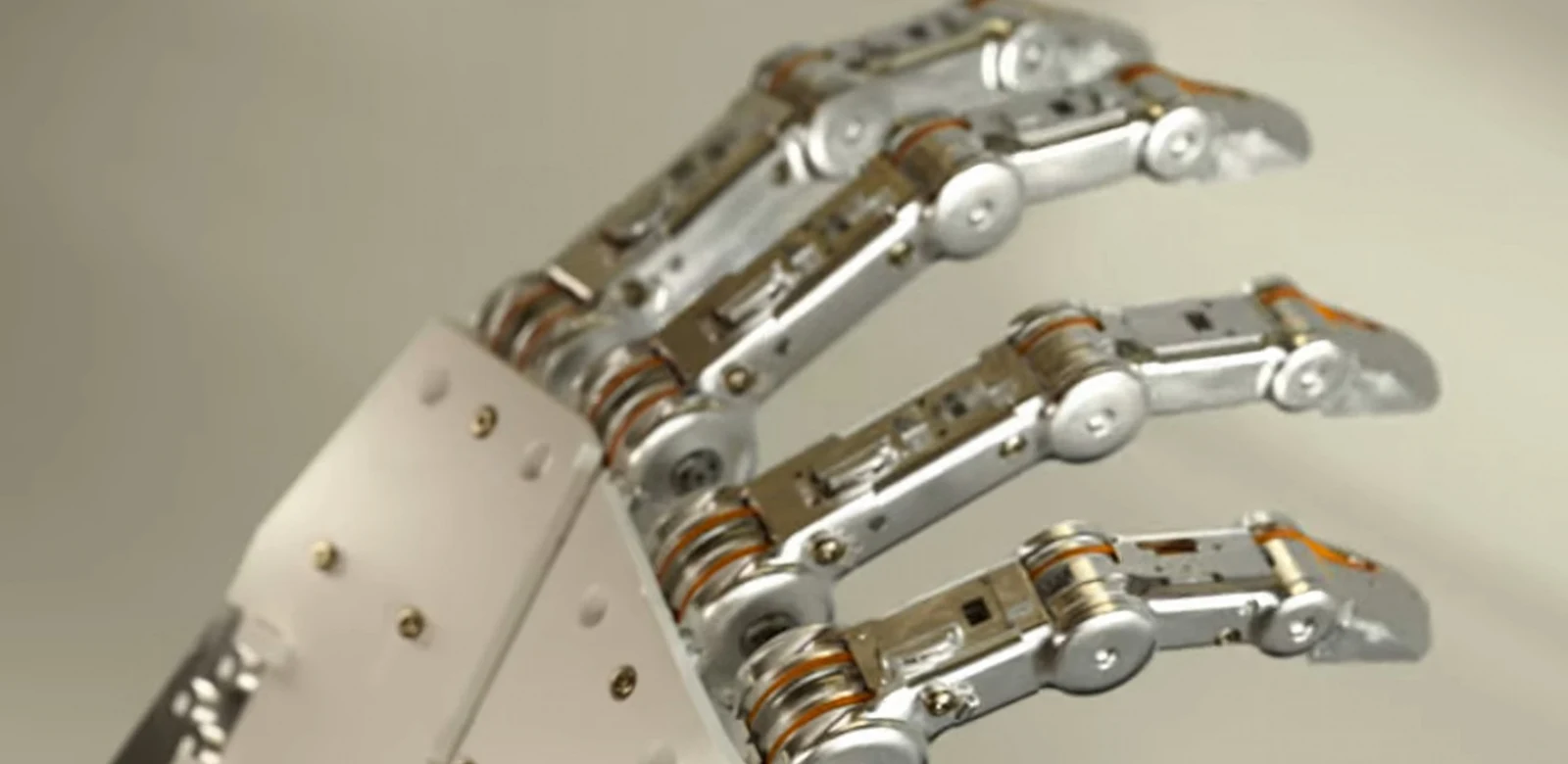
1X has revealed details of the design of the Neo robot's hands: they will have 22 actuated degrees of freedom, and the company is banking on active control to improve grip and natural poses. The consumer humanoid robot is scheduled to ship this year.
Why Neo Robot Arms Are Important
1X Head of Product and Design Dar Sleeper points out that the industry often reduces the capabilities of the hand to a single number of degrees of freedom, even if some of the joints are passive or only move in one direction. In Neo's design, every available degree of freedom is actively driven, including opening movements that other robots often use springs to achieve.
This difference affects more than just grip strength. Forbes notes that passive opening deprives the system of closed-loop feedback about the position of the fingers, which limits control when returning the hand to an open state and makes it difficult to maintain a relaxed, human-like posture.
For humanoids designed to work alongside people, this is important both for the quality of manipulation and for the impression of naturalness in the shared space.
1X also states that the hands that come with the device are different from those shown in early Neo videos. The faster and more nimble version presented by Forbes had not yet been installed on the robot itself at the time of the interview, meaning the hardware announcement is ahead of a full public demonstration on a production system.
Tendon drive and noise
The hand design fits into a broader mechanical concept aimed at home use. Neo uses a proprietary tendon drive system, where high-torque-density motors pull flexible polymer “tendons” instead of rigid gearboxes.
The company says this architecture allows for more precise finger control while reducing noise levels throughout the robot. Sleeper told Forbes that the Neo operates at about 22 decibels.
The same report compares this to humanoid platforms based on harmonic gearboxes, which can weigh 150–200 lb (≈68–91 kg) and are typically noisier, more rigid, and less reversibly driven. 1X lists the Neo's weight at 66 pounds (≈30 kg) and emphasizes the use of a soft "clothing" chassis and low noise levels as part of a safety and comfort strategy for the home environment.
Such decisions highlight a familiar pattern in humanoid design:
Industrial robots: rigidity, load capacity and repeatability
Home robots: compliance, quiet operation and acceptable ergonomic parameters
The claims about Neo's hands are important in part because they signal 1X's attempt to combine subtle manipulation with mechanics designed for close interaction with humans.
Manufacturing and vertical integration
1X's cost argument relates to vertical integration. According to Forbes, the company manufactures its arms, actuators and related subsystems in-house at its site in Hayward, California.
At the site, as indicated, the following are performed:
assembly of the tendon system;
development and production of custom electronics;
production of proprietary 1X motors and proprietary polymer molding;
integration of tactile touch glass.
Sleeper noted that control over the design of motors and tendons helped reduce the cost of components.
The described pricing policy looks aggressive by the standards of modern humanoids. 1X lists Neo's price at $20,000 for a one-time purchase or $499 per month for a subscription; Forbes reports that the company's entire first annual production of 10,000 units was sold out within five days of pre-orders opening.
These numbers will attract attention because few humanoid manufacturers have publicly discussed consumer pricing on this scale.
Home First Strategy
1X is unusual in that it puts the home ahead of factories and warehouses. According to Sleeper's account, as recounted by Forbes, homes generate more varied training data, are more tolerant of errors than production lines, and may offer a faster path to mass adoption.
He acknowledged that complex tasks such as fully autonomous washing remain difficult. Neo's immediate value, he says, will likely come from a variety of small cleaning and retrieval tasks, rather than from fully automating all household processes.
Implementation and scaling
The next test is implementation. The 1X has yet to show the final hands of the Neo on a production device and scale production beyond its sold-out first year.
The company also needs to prove that the software can make practical use of extra reducibility. Still, the report highlights where competition in the humanoid field is shifting, away from questions of locomotion alone and toward the more complex question of whether robotic hands can perform useful and repeatable work in everyday environments.