ABB Robotics and Psyonic teach robots dexterity using human data
English translation from Unibot. Source published 2026-06-30.
ABB Robotics is teaming up with California-based bionic prosthetics developer Psyonic. Together, they intend to advance robotic grasping and dexterity using real-world manipulation data collected from people with prosthetics.
How a prosthesis teaches a robot
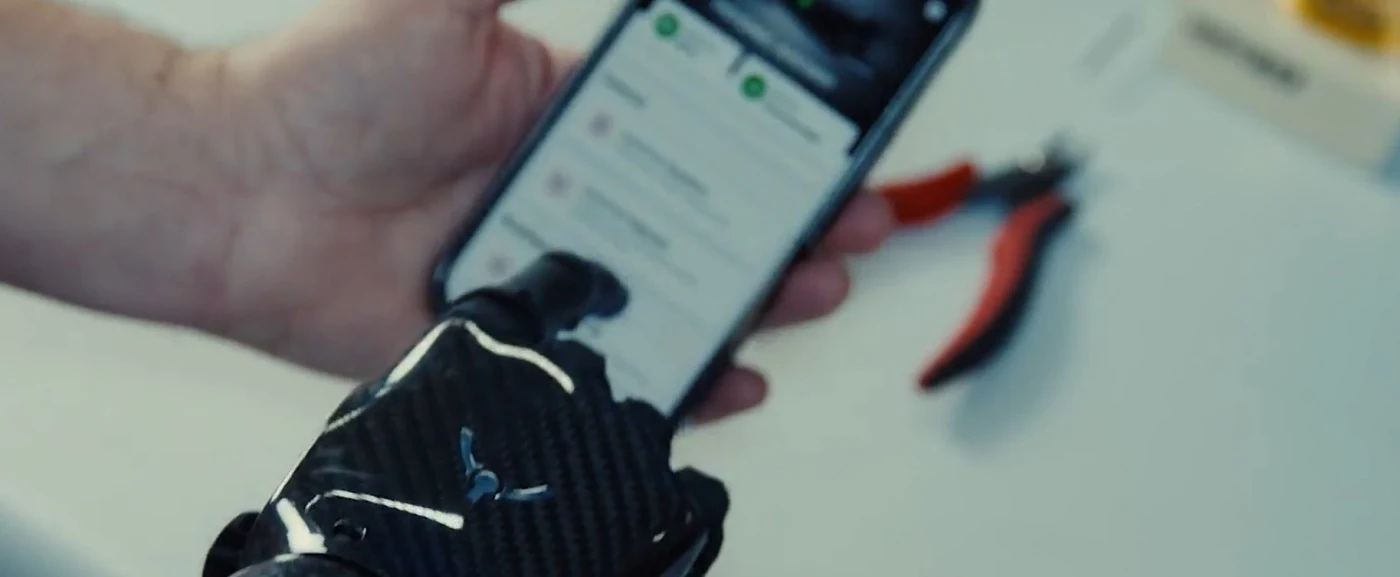
The collaboration is based on a combination of the Psyonic Ability Hand prosthesis and the ABB GoFa collaborative robot. The idea is to use the tactile and motor data generated by a human prosthetic hand to train robots. We are talking about subtle, variable operations that have traditionally been difficult to automate.
Mark Segura, President of ABB Robotics, explains: “Human dexterity and intuitive understanding of how to handle different objects is one of the most difficult things to replicate in industrial robotics. But without this it is impossible to create truly autonomous and universal robots.”
“As we develop the next generation of physical AI, we want robots to learn and understand the world just like we do. The collaboration with Psyonic will help bridge the gap between human and robot dexterity, opening up new opportunities for a variety of industries,” he adds.
From agility to autonomy
The ability to grasp and manipulate is the core of the Autonomous Versatile Robotics (AVR) concept. This is ABB Robotics' vision, where robots sense, analyze, move and handle objects with high precision in dynamic environments.
These same skills are critical to the adoption of physical AI in industry. We are talking about systems that learn from real interactions and apply this experience with the reliability of industrial equipment.
The collaboration will cover a variety of areas, from automotive and aerospace to packaging, logistics and life sciences. If robots take over tasks that are repetitive, unhealthy, or require consistent quality at high volumes, people and machines will be able to work more efficiently. Productivity will increase, flexibility will increase, and workplace safety will improve.
Psyonic is already working closely with the research department of ABB Robotics. Together they are exploring how haptic control can support the next generation of autonomous robotic applications.
Real world data
The Psyonic Ability Hand was originally designed as a prosthetic. Its lightweight, multi-finger design combines myoelectric control, haptic sensors, and compliant mechanics.
Pressure sensors and vibration feedback system allow the user to feel touch, grip force and release moment. And flexible fingers naturally adapt to irregularly shaped or soft objects.
Dr. Adeel Akhtar, founder and CEO of Psyonic, says, “Delicious manipulation is ultimately a matter of data, not just hardware. Using the same Ability Hand on humans and robots, we obtain highly accurate real-world motion, contact, and grip force data. And then we train the robots much more efficiently.”
“Integration with the ABB Robotics platform allows us to expand into new environments and achieve the level of dexterity required for the most complex automation tasks,” he adds.
Industrial precision
The ABB GoFa robot provides the precision and repeatability required for industrial applications. It ensures that subtle differences in grip strength, finger position and movement can be consistently performed and assessed. This precision is critical to turning human input into reliable robot performance on complex and variable tasks.
The collaboration will evaluate how these capabilities work in industrial scenarios where traditional grippers are susceptible to instability, fragility or complexity. For example, when working with non-standard or delicate items.
According to the International Federation of Robotics (IFR), advanced gripping and digital integration can reduce engineering preparation time by up to 30%. This further demonstrates how important tools at the end of the arm are to speed up implementation and increase the impact of automation.
Breakthrough in automation
This project is part of ABB Robotics' broader strategy to work with partners across the ecosystem to overcome long-standing barriers to automation. By combining robotics, AI and real-world manipulation data from human prosthetics, ABB Robotics is advancing physical AI. And creates more capable, adaptable robots that perform reliably in real-world environments.