AI-powered underwater robots learn to detect diver stress from air bubbles
English translation from Unibot. Source published 2026-07-28.
Breathing underwater: AI has learned to assess a diver’s health by bubbles
The University of Minnesota has developed a unique artificial intelligence system. It gives underwater companion robots the ability to monitor a person's condition in real time. And what’s most interesting is that you don’t need any sensors on your body for this. It is enough to simply “look” at the bubbles that the diver exhales.
A publication about this appeared in the International Journal of Robotics Research. In fact, this is the first time robotic vision has been used to measure breathing rates underwater. Well, how do you like this?
What is the benefit for submariners?
Diving is a risky thing, especially when it comes to extreme conditions. The body receives a wild load: from banal fatigue to serious breathing problems that can threaten life.
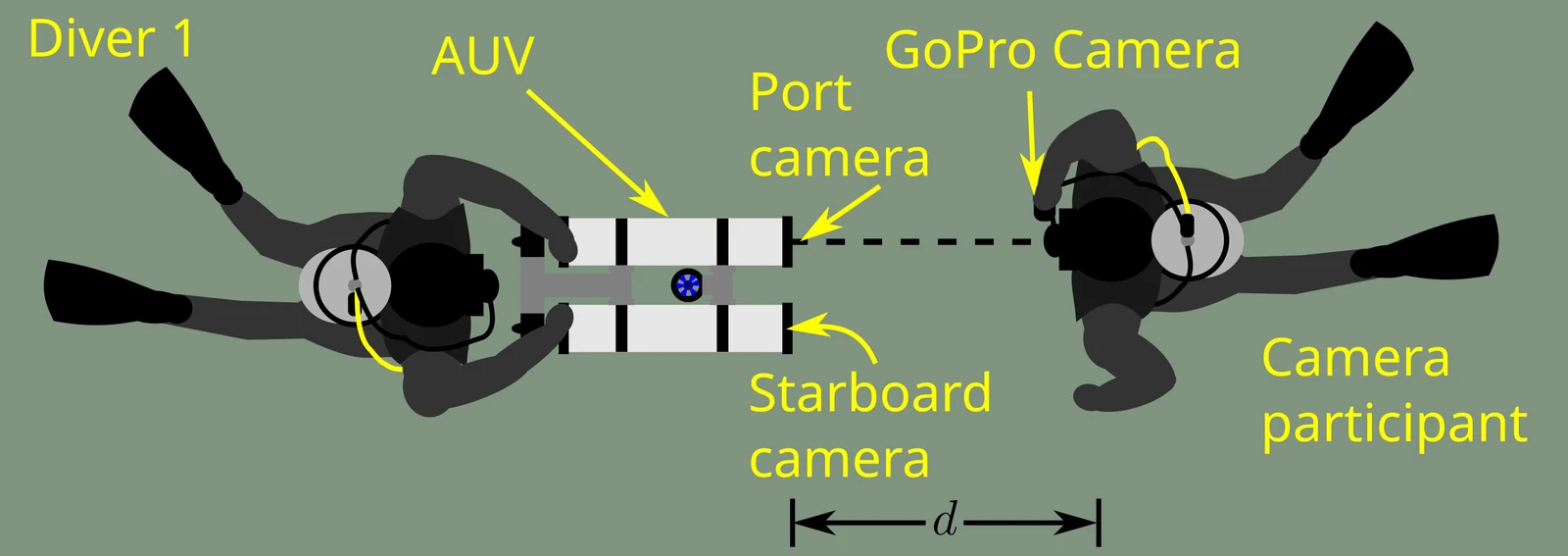
Now robots equipped with cameras can record how often and how intensely a diver releases bubbles from the regulator. And right on the go, notice signs of stress, hyperventilation or exhaustion. By the way, this non-contact approach solves a long-standing headache for researchers.
Conventional medical sensors and wearable gadgets are often useless underwater. Thick wetsuits and drysuits block the contact needed for accurate measurements. But transmitting data over water wirelessly is a completely different story.
How robots were taught to “see” breathing
“We wanted to give divers a reliable robotic buddy that would act as a second eye and be able to assess physiological stress underwater,” said Junad Sattar, assistant professor of computer science and engineering and senior author of the paper. “This is the first step towards assessing the condition of not just one, but an entire group of divers in the field of view of the robot.”
To train the AI, the team came up with a “fuzzy labeling” system. Underwater footage is often cloudy, so researchers had to manually label thousands of images. To help, we used synchronized audio recordings - the characteristic sounds of exhalations from the regulator. So the robot gradually learned to understand exactly what inhalation and exhalation look like.
“Monitoring your breathing on land is standard practice. But underwater, this is a huge technical problem,” explains Demetrius Kutzke, a graduate student in the Robotics and Vision Laboratory at the University of Minnesota and lead author of the study.
To cope with the task, we collected an extensive database of audio and video recordings from a variety of conditions. After all, an autonomous underwater vehicle (AUV) must operate in water of varying temperatures and clarity. Data was collected in different places:
from Lake Superior in Duluth and Square Lake in Stillwater (Minnesota)
to the Caribbean Sea off the coast of Barbados
From field testing to alarms
The heart of the field testing was the HREyes communication system. Through it, the robot informed the partner diver about his condition. Breathing was classified as “below normal” (less than fourteen breaths per minute), “normal” (fourteen to twenty breaths) or “above normal” (more than twenty breaths).
By translating visual observations into breaths per minute, the robot determines whether the diver is experiencing stress. The team's plan is to combine breathing rate data with analysis of the diver's movements. The merging of these indicators will give a comprehensive “well-being profile”. This means maximum safety during deep-sea diving.
In addition to Sattar and Kutzke, the team included Vennela Dupathi, a student in the Department of Computer Science and Engineering and the Department of Electrical and Computer Engineering.
Imprint
Demetrius T. Katzke et al., “Robotic Estimation of a Lone Scuba Diver's Breathing Rate for Safety in Underwater Human-Robot Interaction,” International Journal of Robotics (2026). DOI: 10.1177/02783649251411466