ANYbotics launched the Shift platform to manage a fleet of autonomous robot inspectors
English translation from Unibot. Source published 2026-10-02.
ANYbotics has released Shift, a software platform for managing a fleet of autonomous inspection robots. It links the data they collect directly to industrial maintenance systems and enterprise systems.
The platform integrates site mapping, robot fleet management, inspection data and maintenance workflows. Thanks to this, companies can operate several robots at once, and the results of their work are tied to existing industrial assets.
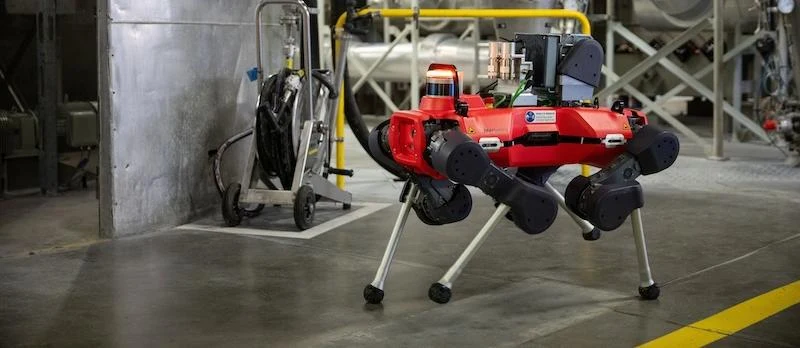
At first, ANYbotics targeted the process industries: energy, metallurgy, mining and chemicals. This is where ANYmal four-legged robots are already being used for autonomous equipment inspections.
“Robotic inspection delivers maximum value when site data is immediately translated into maintenance actions. Shift makes this process seamless. The platform combines enterprise mapping, robot fleet coordination, AI-powered inspection analytics and system integrations - all in one solution.
Shift is powered by AI, which turns inspection results into work orders. This saves millions by helping to avoid unplanned downtime.”
So says Peter Fankhauser, co-founder and CEO of ANYbotics.
From robot inspection to repair work
Shift gives operations teams the ability to plan missions and monitor the health, charge and location of robots from a single interface. Reliability specialists review inspection results and receive notifications when abnormalities are detected. And through the API, the platform exchanges data with maintenance systems, corporate systems and asset performance management systems.
This works both ways. External systems can launch robot missions, and Shift sends inspection results and alerts back to the software that plant operators already use.
The platform consists of four main modules:
Shift Fleet controls and schedules robots.
Shift Insight analyzes thermal, acoustic, visual and gas measurements along with operating conditions.
Shift Connect connects robotic findings to enterprise and maintenance systems.
Shift Maps provides a digital representation of the plant and the hierarchy of its assets.
Shift Connect supports integration with distributed control systems, as well as CMMS, ERP and asset performance management platforms, including SAP, IBM Maximo, GE Vernova APM, Cognite and Oracle.
Jakob Euler-Rolle, Head of Product Management and Workflow Integration at ANYbotics, says: “Shift AI connects all four modules and serves as the common intellectual foundation on which they operate.
“The reading is not just stored - it comes with an understanding of what asset it belongs to, where that asset is located, what it looked like last time and what the work order should be.
“The plant model from Maps, the inspection task from Fleet, the interpretation from Insight, and the action from Connect are one continuous workflow.
“And it goes both ways: a work order or process alarm can send a fleet of robots straight back to the asset. Each cycle of this process feeds Shift AI, and the next cycle becomes smarter.”
ANYbotics plans to support third-party robots
According to ANYbotics, Shift is already used in more than 200 robotic deployments and processes hundreds of thousands of inspections every month. At the Sacramento Municipal Utility District, the company says the platform helped save more than $3.5 million in its first months of operation by identifying overheating conductors, partial discharges and gas leaks in critical substation assets. And at the Vigier cement plant, which operates 24 hours a day, Shift carried out more than 33,000 autonomous inspections in 16 months.
Niha Joshi, Product Leader, GE Vernova APM, says, “The ANYbotics Shift API gives our APM platform consistent, valuable equipment-level inspection data from across the shop floor.
“Combining field data with our analytics creates a more complete picture of asset health and helps teams more effectively identify, verify and resolve issues.
“When our models signal a possible problem, we send robots through the same API to check it and collect additional context.
“The integration went smoothly - field data easily fits into existing processes and accelerates value for our customers.”
Adela Fatykhova, global lead architect for embodied AI agents, physical AI and robotics at SAP, says: “Shift makes it easier for SAP to integrate robotic inspections into business processes.
“Physical AI on the SAP Business AI platform translates a business problem into a Shift mission, and the results are fed back to SAP for subsequent actions, such as creating a maintenance order. Robot Missions through Shift strengthens SAP’s autonomous supply chain for asset maintenance and field operations by enabling robotic task execution.”
Vassilis Zogogiannis, Senior Director of Operational Excellence at Steelmet (Viohalco Group), says: “We operate steel mills in several countries and previously each site carried out inspections differently.
“Shift gives us one platform and a single view of the health of our steel, aluminum and copper assets. We tested this on one line, and since the data is structured the same everywhere, we expand the system plant by plant without having to start all over again.”
Julie Clavier, director of digital service solutions at Kanadevia Inova, says: “We build, operate and maintain waste-to-energy plants, and our digital services only work when field data is structured and reliable.
“Shift does walk-throughs for us and puts all the readings in one place, so it’s become part of how we deliver digital services to our own customers.”
Cloud, migration and expansion plans
According to ANYbotics, Shift will initially operate as a managed cloud platform with regional data hosting. But if necessary, clients will be able to deploy it in their own cloud or on their servers.
Those already using ANYbotics' Data Navigator platform will automatically migrate to Shift - no separate migration required.
The company also plans to expand Shift beyond its own ANYmal robots and add support for third-party robotics systems in the coming months. This would turn the platform into a hardware-independent command center capable of managing mixed fleets of robots. And its API architecture would allow industrial AI agents to dynamically assign tasks and embed robotic inspection data into broader plant automation workflows.