Audi tests wheeled humanoid robots Agile Robots at the Ingolstadt plant
English translation from Unibot. Source published 2026-10-30.
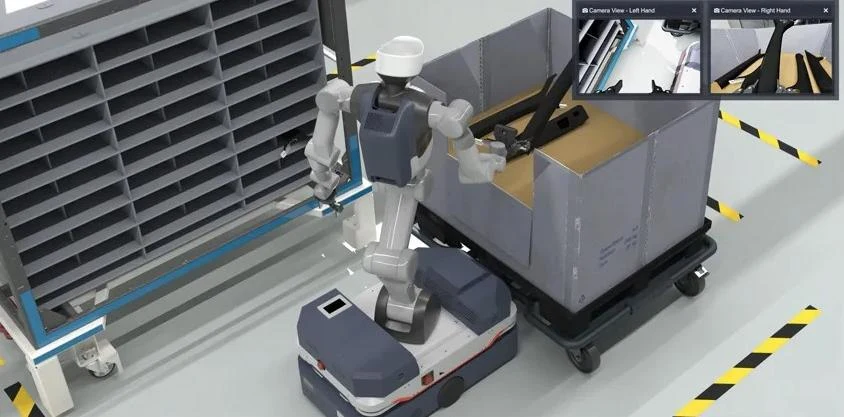
Audi has begun testing wheeled humanoid robots from Agile Robots. They sort parts in a production laboratory at a plant in Ingolstadt, writes Assembly Magazine.
What exactly do robots do?
The task seems simple: robots take components from containers and arrange them in the order needed for final assembly. But behind this simplicity there is a huge amount of work.
Every day, plant workers make about a million of these “picks” to deliver the right part to the right area. Audi is counting on humanoid machines to make the process faster, more accurate and cheaper. True, we are still talking about a laboratory test, and not about a production rollout.
How the robots work
The robots have two arms and work at human height, making it easier to fit into the existing factory environment. Audi supply chain specialists themselves determined the operational requirements and shared their sorting experience.
Where the difficulties begin
This is where the real difficulties begin. There are two things that need to be automated: the handling of semi-rigid parts and the selection of unsorted components from containers.
Assembly Magazine describes the Agile Robots system as dual-arm handling designed for large, flexible parts. And AI perception must recognize and grasp components that are in mixed containers, in different positions and in different packaging.
So the practical test here is much more specific than just checking the mobility of the robot around the workshop: can the machines cope with the parts and feeding conditions that sorting requires?
Simulation before entering the workshop
NVIDIA supplied AI-based software for the project, and Dassault Systèmes supplied simulation software that helps program robots. Before releasing them into in-plant logistics, a virtual twin of the logistics environment is created based on Delmia from Dassault.
Engineers will use the 3DEXPERIENCE platform with built-in NVIDIA Omniverse libraries to test task feasibility, timing, ergonomics and safety. According to Dassault CEO Philipp Laufer, this approach reduces engineering work from months to days.
In the case of the Audi test, the planned simulation covers both whether the task is feasible in principle and how it fits into the logistics environment.