BBC presented sitcom Ann Droid about robots for elderly care
English translation from Unibot. Source published 2026-09-08.
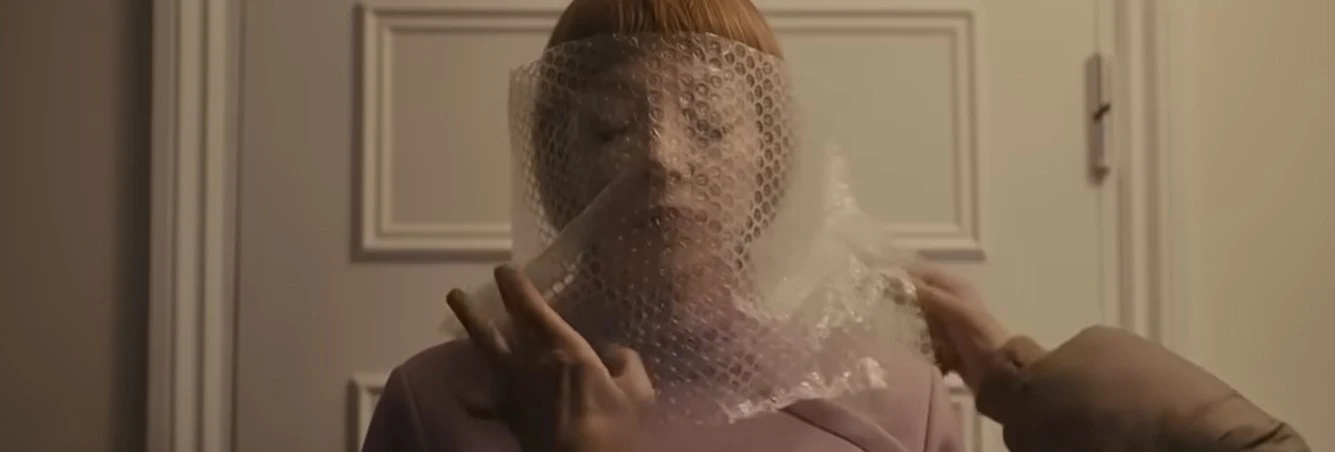
The new BBC sitcom Ann Droid depicts a near future where robots care for elderly people at home and relieve their loneliness. The story centers on Sue, a recently widowed woman played by Sue Johnston, her clueless son Michael and her robot assistant Linda, played by Diane Morgan.
Linda was created to support and entertain her owner every day, and from this, as usual, a lot of comical situations arise. We do research in the areas of social care, aging and human-centered robotics, so Ann Droid was, of course, looked at very closely. Behind the jokes are hidden questions that scientists are already struggling with.
What already exists in reality
Can robots help older people cope with loneliness? Can a machine provide the warmth of communication without replacing real human connections? The series, of course, exaggerates the capabilities of robots, but some of the technologies shown are already being tested in reality.
In the south west of England, the social enterprise is trialling Comfort Companions with Age UK South Gloucestershire. AI characters talk to lonely elderly people and offer prompts. The project works in parallel with the Age UK volunteer program, where volunteers help older people master the application.
Artificial interlocutors are not intended as a replacement for live volunteers, but as a way to pass the time in line for them. Robots in the form of physical objects are also tested. West Berkshire County Council has launched a trial program with robotic pets in its care homes.
But none of these projects offer androids like Linda. Today's systems are either avatars on the screen, or robot cats and robot dogs, or speakers that provide voices in the room. And they have much less opportunities than Linda. They are not able to lift a person after a fall, wash him or dress him.
But technology is great at monitoring and reminding. Systems that notice a fall and call for help are already quite mature. Gadgets can also push a person to call friends or leave the house.
Can a machine relieve loneliness?
It is important to distinguish here: loneliness is not the same as the absence of people nearby. It is a personal feeling that the relationship is not enough and a desire for more or better communication. Therefore, a companion robot is unlikely to solve the problem with its presence alone.
What matters is the quality of the interaction and whether the technology helps a person maintain connections with those they care about. Ann Droid has an interesting idea about this. Linda sometimes strengthens Sue's relationships with others, rather than replacing them: she encourages her to meet with friends, plan forays out of the house.
Perhaps this is how we should think about companion technologies. The goal is not to create an artificial friend instead of a real one, but to help a person stay connected with others.
What robots can't do yet
There are still plenty of obstacles. Take at least the battery. Most humanoid robots last between 90 minutes and five hours on a single charge, and only when new. So spending the night in a tent from a sitcom is an honest test of your imagination.
Robots are good at some tasks and helpless at others. The machine can easily play chess, but picking up an unfamiliar object from the floor is still surprisingly difficult for it.
Social barriers are even more difficult. Robots do not understand the subtleties of communication that people take for granted. Systems that learn by copying human behavior can reproduce an action without understanding its meaning. And even more so, they cannot reliably read facial expressions.
A review of facial emotion recognition systems showed that they work worst with older faces, and identify anger and neutral expressions least accurately. For care, this is critical - understanding how a person feels can be vital.
Would we trust a robot to take care of us?
“Ann Droid” also touches on a deeper concern: can we trust the machine that is designed to look after us? The series, in a playful way, addresses public fears of communicating with robots - mistrust and fears that they will cause harm. In one episode, two robots joke with each other about how they will kill their human masters.
Research shows that older adults see benefits from robotic companions. But they accept them only partially - if they feel that control remains with them. And appearance matters too.
In 1970, roboticist Masahiro Mori proposed the idea of the “uncanny valley.” The more a machine resembles a person, the warmer we initially feel about it. But when the similarity is almost complete, but still not completely, sympathy gives way to anxiety.
What no machine can replace
Robots have obvious advantages. They are never bored, they do not get tired and do not lose patience. They handle dangerous work and are available at three in the morning. But there is one fundamental thing they cannot provide: a relationship in which both parties have chosen each other.
It is this connection that no machine can replace. Robots can be useful in the social sphere, but they only make sense when people want them, in addition to human care and communication. Otherwise, we risk finding an expensive technical answer to a much more difficult question: why do older people have so little human contact in the first place?
Maria José Galvez Trigo, Senior Lecturer (Associate Professor) in Human-Centered Robotics and AI, Cardiff University, and Paul Willis, Professor of Social Work, Cardiff University.