Bedrock Robotics launched autonomous excavators without operators
English translation from Unibot. Source published 2026-08-27.
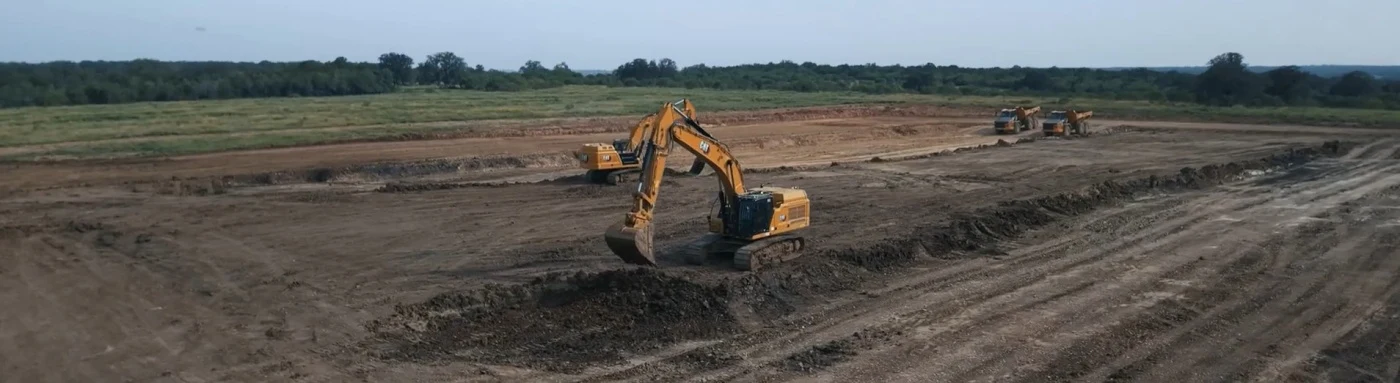
Bedrock Robotics Inc. introduced fully autonomous heavy excavators to existing infrastructure facilities in Texas and Nevada. The equipment, converted to its own technologies, operates without operators in the cab.
AI projects directly address the construction industry's biggest pain points: critical labor shortages, safety risks and ballooning budgets.
Personnel crisis and emphasis on autonomy
The United States is on the verge of a personnel collapse: more than 40% of construction workers will retire in the next five years. Against this backdrop, Bedrock says its technology comes at a crucial time for the nation's infrastructure ambitions.
The startup has $350 million in venture capital behind it and a team of autonomous driving veterans from Waymo. Their design system turns complex and dangerous excavation work into a software-controlled process.
The San Francisco-based company says it is helping the physical economy move from digital AI concepts to self-organizing fleets of machines on real construction sites.
The first projects with fully autonomous excavators
Bedrock Robotics already has several pilot projects in its portfolio. Among them:
a wastewater treatment plant in Nevada in partnership with Sundt Construction;
a multi-million cubic yard excavation site with Champion Site Prep in Texas;
civil engineering for 1.2 million cubic yards with Zachry Construction Corp.
The company emphasizes that these launches mark an important shift as AI begins to perform work with real economic value in the physical world. And this is a step towards something bigger - fleets of machines that can coordinate themselves between different types of equipment: planning, distributing and executing jobsite tasks at a pace and scale the industry has never seen before.
What is the scale of current projects? “We're doing a lot of ground clearance right now: early excavation, cut and fill, foundation preparation, rough grading before more detailed work,” Kevin Peterson, technical director at Bedrock Robotics, told The Robot Report.
In the future, the Bedrock design will also allow the conversion of existing latest model excavators. For now, the company works only with new equipment, which is equipped and tested at the headquarters. Peterson expects the system to be operational on partner equipment by the end of the year.
Safety as priority number one
Bedrock Robotics does not compromise on safety. Safety is the number one priority when deploying systems, says Peterson.
"We can't sacrifice safety," he says. - Machines work next to people; water trucks arrive, and the equipment must react. This is exactly what is important for us. When you retrofit existing machines, you are faced with the fact that all the sensors on the equipment, the signals that come back, and the condition of the machine are important to us.”
Bedrock systems are capable of operating safely without an operator in the cab. “The system monitors itself, evaluates what it is doing, whether it is moving forward, and if it gets stuck, it contacts the base,” explains Peterson. “If it gets stuck, there is a procedure to solve the problem.”
Having a “human in the loop” ensures successful operations and minimizes downtime on site, Bedrock adds.
The startup aims to scale
“We have three big areas ahead,” notes Peterson. - The first is the expansion of the number of deployed systems. We want more customers to use these machines, it gives us experience.”
“The second direction is new tasks,” he continues. “We are mastering more subtle types of work, which opens up more and more opportunities.”
“There are still a lot of things we're working on,” Peterson says. - We are seriously thinking about orchestrating multiple machines. This is a long-term story, but soon clusters of technology working together will appear on the roadmap. An excavator, a bulldozer, a dump truck, and maybe even a grader - they act as one team. We want to speed up construction projects - simple or complex - but this requires machines that communicate with each other.”
Construction is ripe for autonomy
The industry is reaching its limits, Bedrock Robotics says. Twenty percent of construction workers are over 55, and analysts estimate that more than 40% of the industry's workers will retire in the next five years.
Large projects already miss deadlines by 20% on average and exceed budget by 80%. Compounding the situation is the inherent danger of the profession: construction workers make up 7.5% of the workforce, but account for 20% of workplace fatalities.
“The physical economy is the next great frontier for machine learning,” says Boris Sofman, co-founder and CEO of Bedrock Robotics. “Today, excavators already move soil independently, but we are moving towards coordinated fleets of equipment that themselves organize entire volumes of work.”
“The journey here has required a true partnership with the contractors who design these solutions with us, and an unwavering commitment to safety, responsibility and optimism for the future,” he says. “This changes not just the performance of a single machine, but the sheer scale of what contractors - and our country - can achieve.”
Sofman was a guest on Episode 236 of The Robot Report Podcast earlier this year. On air, he spoke about his long-term vision for the company.
Why did you choose excavators?
Bedrock Robotics said it was betting on excavators. This is the most complex and in demand machine on the site; it accounts for up to 25% of the contractor’s fleet. To truly master an excavator, you need five years of experience, or more. Therefore, it is most difficult to predictably staff such machines with qualified operators.
Starting with excavation makes the foundation of any large project predictable, the company explained. Until the excavation is completed, no next stage - concrete, steel, mechanical or electrical - can begin.
The Bedrock Operator system retrofits existing fleets with a sophisticated array of sensors and computing modules. Installation takes one day and does not require permanent modifications or the purchase of new machines. The system is trained on tens of thousands of hours of field work. The end-to-end machine learning model allows technology to perceive its surroundings, plan movements and perform complex tasks autonomously once the site manager sets the initial plan.
After a year of testing on real construction sites under human supervision, the Bedrock machines have proven their readiness.
“Our partnership with Bedrock Robotics helps solve the problems that matter most in construction: making schedules and estimates predictable, achieving more consistent equipment utilization, and allowing our experienced crews to focus on the work where their expertise matters most,” said Cade Rowley, CEO of Sundt Construction Inc.
“AI is opening up opportunities in our industry that we could not have imagined just a few years ago, both in the office and on the site,” he added. “We are an employee-owned company, and these tools help us do more, work smarter, and create new opportunities for people.”