BMW launches humanoid robot Figure 03 to sort parts in the US
English translation from Unibot. Source published 2026-07-01.
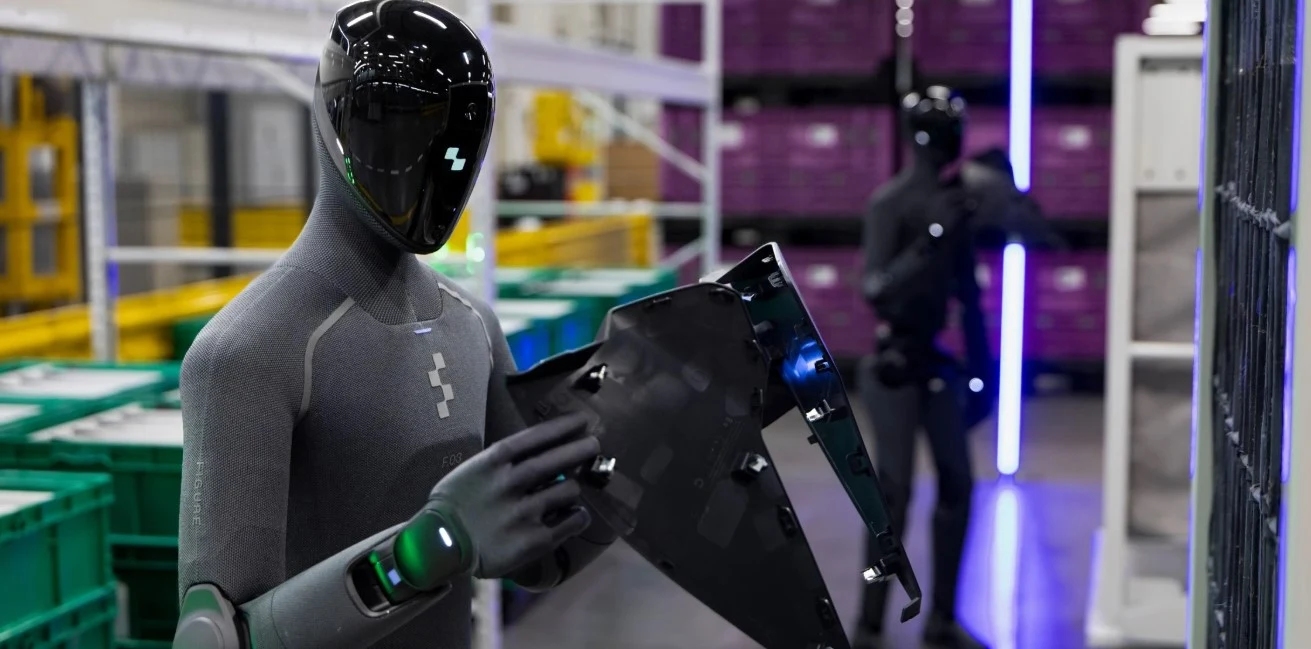
The BMW Group plant in Spartanburg (USA) is preparing to deploy Figure 03. This is an updated humanoid robot from the company Figure. He will be entrusted with the task of sorting parts in logistics, writes Technology.org with reference to BMW.
Narrow but practical scenario
Figure 03 will place components from large containers into a cart for consistent feeding. The job requires recognition of parts, grip and enough dexterity to handle different elements - without rigid industrial equipment that would do almost everything itself.
BMW had previously tested the Figure 02 for eleven months in the same plant's body shop. According to the source, during this time the robot helped produce more than 30,000 BMW X3 cars. The company describes this work within the framework of the concept of “Physical AI” - that is, artificial intelligence software built into physical production systems.
What's new in Figure 03
Among the announced improvements to the Figure 03 are soft surfaces for greater safety, wireless charging, speech-to-speech communication and modified manipulators. The source does not provide data on payload, battery life, level of independence or the number of robots in the fleet. So this is more of a description of the working scenario, rather than a full disclosure of the characteristics.
Ulrich Wieland, vice president of production control and logistics at the BMW Spartanburg plant, called the facility "the birthplace of humanoid robotics" in BMW Manufacturing operations - after the Figure 02 pilot in the body shop. According to him, the company now intends to deploy Figure 03 for sorting in logistics.
Testing in real production
The choice of task is revealing. Sorting parts is a job that is repetitive, ergonomically strenuous, and variable enough to expose weaknesses in perception and manipulation. Moreover, it is much less impressive than many demonstrations of humanoid robots. This means that this is a good test: whether a universal body can justify its place in real automotive production.
The source also warns: humanoid robots are not yet ready to replace people in industry. BMW's current position is more modest: humanoids are tested in monotonous, ergonomically difficult or dangerous operations where flexibility is needed and it is not profitable to introduce conventional automation.