Catalyst Brands Brings Figure AI Humanoid Robots to Reno Distribution Center
English translation from Unibot. Source published 2026-05-28.
Figure AI and Catalyst Brands collaboration: humanoid robots in sorting and packaging
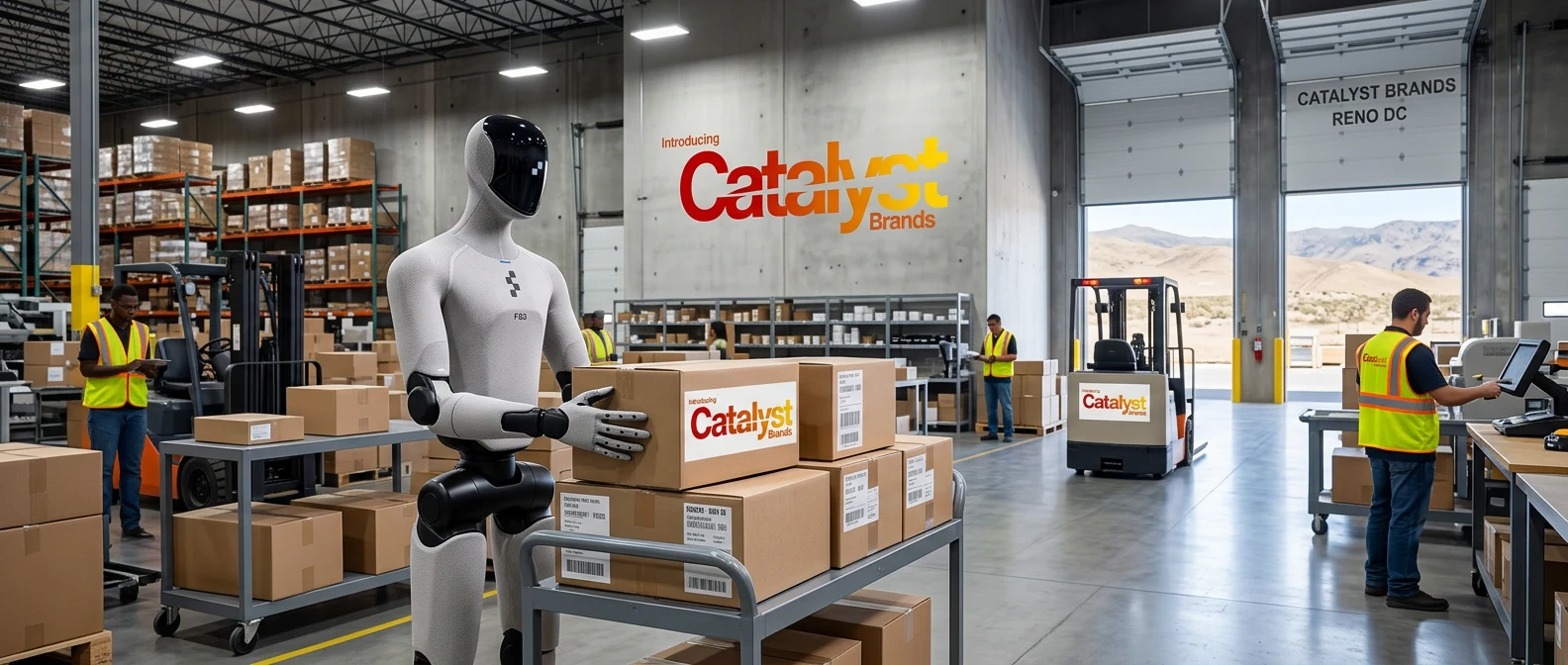
Catalyst Brands has partnered with Figure AI to integrate Figure AI's humanoid robots into sorting and packaging processes at its distribution center in Reno, Nevada. The May 27 announcement targets repetitive and physically demanding logistics tasks and brings JCPenney parent company Catalyst's humanoid robotics program into the retail workforce.
Introduction of Figure AI humanoids into Reno's operation
The partnership includes Catalyst Brands' distribution and logistics center in Reno, where the company said robots will help automate jobs currently done by humans. The goal is to improve the efficiency of the site's supply chain and redeploy employees to more skilled roles.
The company itself is no longer new to investing in automation. The Reno facility underwent $40 million in infrastructure upgrades in 2024, according to Home Textiles Today, and the current introduction of humanoids complements this broader upgrade program.
The robots will initially assist employees in the sorting sequence of the Joey Pouch system, a computerized receiving, sorting and packaging system, the report describes. Catalyst and Figure intend to then identify additional applications for humanoid automation throughout the system, but the report does not specify the number of robots, performance targets, or implementation timetable.
Why is this important for retail logistics?
This case is notable because the first workflow announced is narrowly focused and operationally specific. Instead of making broad promises to implement humanoids throughout the enterprise, Catalyst is starting with sorting and packaging work within the existing logistics process.
This is important for robotics operators because specific tasks are easier to evaluate than vague statements. In this case, the emphasis is on repetitive and physically demanding work - the type of tasks that many humanoid developers are targeting in an attempt to move from demonstrations to commercial use.
It's also worth considering that the announcement is associated with a large retail holding company. Catalyst is the parent company of JCPenney, Aéropostale, Brooks Brothers, Lucky Brand and Nautica, so even the limited rollout in Reno will be closely scrutinized to see how humanoid systems can integrate into distribution operations for multiple brands without having to develop a customized robotic strategy for each division.
Wide Position Figure
Figure is described in the report as an AI robotics company developing autonomous humanoid robots for general purposes. The story also notes that demo videos on Figure's website show robots unloading dishes from a dishwasher, making a bed, folding laundry and cleaning a living room, highlighting the company's commitment to both the industrial and residential segments.
For now, the Renault rollout gives Figure a concrete logistics application to build on. Mark Rosen, CEO of Catalyst Brands, noted that the collaboration shows how new technologies can modernize operations while strengthening the role of the workforce — language that positions humanoids as a complement to warehouse systems rather than a complete replacement for humans.
Figure founder and CEO Brett Adcock described the partnership more broadly, saying the company's humanoids could serve as a standardized workforce solution across industries. This remains a company assertion rather than a confirmed result for now, but the Reno site gives Figure the opportunity to test whether the general-purpose platform can adapt to the retail distribution environment.
What's Next for Figure AI Humanoid Robots
The next step is simple: Catalyst and Figure must determine whether the initial work on the Joey Pouch sequence will expand to other areas of operations. If robots can move beyond the first workflow and tackle repetitive logistics tasks throughout a facility, the partnership will begin to look more like an operational program rather than an isolated pilot.
For the humanoid robotics sector, this announcement adds another information point to a market that increasingly requires named customers, defined tasks and measurable implementations. The scale, performance metrics, and speed at which Figure AI's humanoid robots will be able to move from initial warehouse assistance to sustained day-to-day operations in production environments still remain unknowns.