Figure AI demonstrates that Helix-02 humanoids can work eight-hour shifts
English translation from Unibot. Source published 2026-05-15.
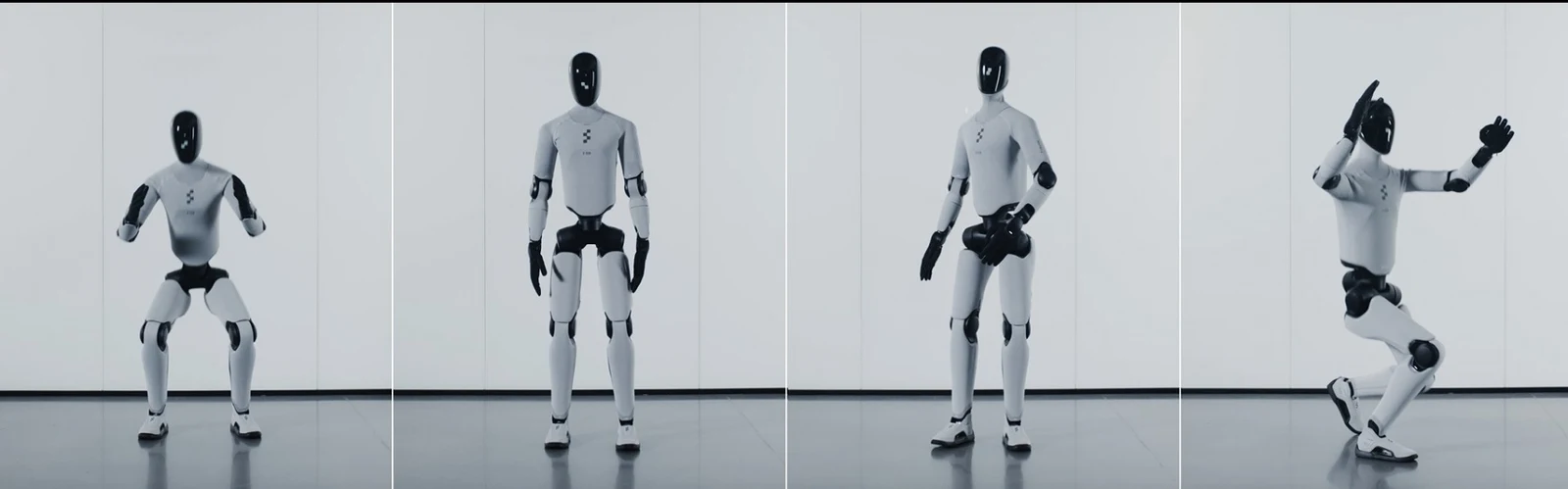
Figure AI claims that its Helix-02 humanoid robots are now capable of sustaining a full eight-hour factory shift without human intervention, a claim published in a post in X. This is important for the humanoid robotics market, as sustained autonomous operation remains one of the most glaring barriers between short demonstrations and practical industrial applications.
According to Figure AI, the robots performed at human performance levels, operating completely autonomously based on the Helix‑02 AI system. As Interesting Engineering reports, this is one of the company's boldest public statements about the possibility of human-scale robotic labor in real-world settings.
Helix‑02 humanoid robots and the eight-hour shift claim
The company builds a message around autonomy throughout a shift, rather than around performing one single task. Figure AI claimed that a team of humanoid robots can work an entire eight-hour shift without intervention, expanding the debate from manipulation benchmarks and short task clips to the operational question of whether a humanoid can remain productive throughout a work period.
The source material does not provide detailed data on throughput, error rates, or line-by-line analysis for an eight-hour run. This leaves open key questions for operators: what proportion of the shift was continuous work, what types of plant tasks were included, and how the metrics compare to previous deployments under standardized conditions.
The announcement also builds on Figure AI's previous work with BMW. The story notes that the Figure 02 robots were tested at the BMW Group Plant Spartanburg in South Carolina, and that the company previously reported 10-hour shifts there that moved more than 90,000 parts and supported production associated with more than 30,000 BMW vehicles.
These early production references give the new announcement more context than a lab demo. At the same time, the eight-hour figure remains the company's own statement, and the source text makes no mention of independent validation or third-party benchmark data.
How Helix-02 combines control and manipulation
Figure AI describes Helix‑02 as a single neural network that allows humanoid robots to walk, manipulate objects, maintain balance and coordinate movements continuously, relying on built-in sensors. The company contrasts this approach with traditional industrial robots, which often have separate locomotion and manipulation systems.
According to the source, Helix-02 integrates vision, touch, proprioception and whole-body control into one learning system for longer-term tasks in dynamic environments. Inputs come from cameras in the head, cameras in the palms, tactile sensors at the fingertips and general body proprioception, and are then converted into coordinated movements of the legs, torso, arms, wrists and fingers.
Figure AI also introduced what it calls System 0, a full-body learning controller trained on more than 1,000 hours of human movement data. This replaces more than 109,000 lines of hand-written C++ code with a neural control system designed to support robust, human-like dynamics, the company says.
This architectural point is important because the deployment of humanoids is limited not only by the processing of objects, but also by the need to maintain balance and posture during long-term work. A single control stack encompassing mobility and fine manipulation is at the heart of Figure's argument that humanoids can operate effectively in spaces designed for humans rather than stationary automation.
Range of tasks outside the factory assembly line
To reinforce the versatility point, Figure AI pointed to several demonstrations outside of the assembly line. In one example, a humanoid robot autonomously unloaded and loaded a dishwasher in a full kitchen for four continuous minutes without restarts or human intervention.
The company also demonstrated fine motor skills: unscrewing bottle caps, removing pills from organizers, accurately selecting syringe volumes, and selecting metal parts from cluttered trays using tactile sensation and vision in the palm of the hand. These examples are significant because they combine contact-rich manipulation with a level of object variability that fixed industrial automation usually avoids.
Figure AI also reported that Helix‑02 supports multi-robot collaboration. In another demo described in the source, two humanoid robots tidied up a bedroom in less than two minutes—hanging clothes, making the bed, taking out the trash, closing books, rearranging furniture, and coordinating on shared items—without a central controller.
For practitioners, such a mixture of domestic and industrial tasks indicates that Figure is positioning the platform not for the optimization of one place, but for the portability of solutions. The company says future humanoid robots must be able to operate in shared human spaces—factories, warehouses, and homes—where they must respond to people, objects, and other robots in real time.
What does this announcement mean for the humanoid market?
The broad meaning of the statement is not only technical, but also competitive. Interesting Engineering puts Figure AI in direct competition with Tesla, Agility Robotics and Apptronik, companies seeking to commercialize versatile humanoid robots for industrial applications.
In this context, the “eight-hour shift” statement is important not as a single milestone, but as an indicator of what metrics the industry is starting to take into account. The focus shifts from short demonstration videos to indicators such as endurance, frequency of interventions, continuity of tasks and the ability to coordinate movements of the whole body for an entire shift.
It remains unclear how Figure AI will document these statements for customers evaluating real-world implementations. Buyers will likely want more information about uptime, error recovery mechanisms, security behavior in shared spaces, and performance consistency across mixed workloads.
If Figure can prove long-term battery life in a production environment, it will strengthen the argument that humanoids are moving from the demonstration phase into the production phase. The next step for the industry is not just longer videos, but reproducible data showing that humanoid systems are able to maintain productivity over time inside active work sites.