Generative Bionics Unveils Humanoid Robot with Full-Body Haptic Sensing
English translation from Unibot. Source published 2026-07-22.
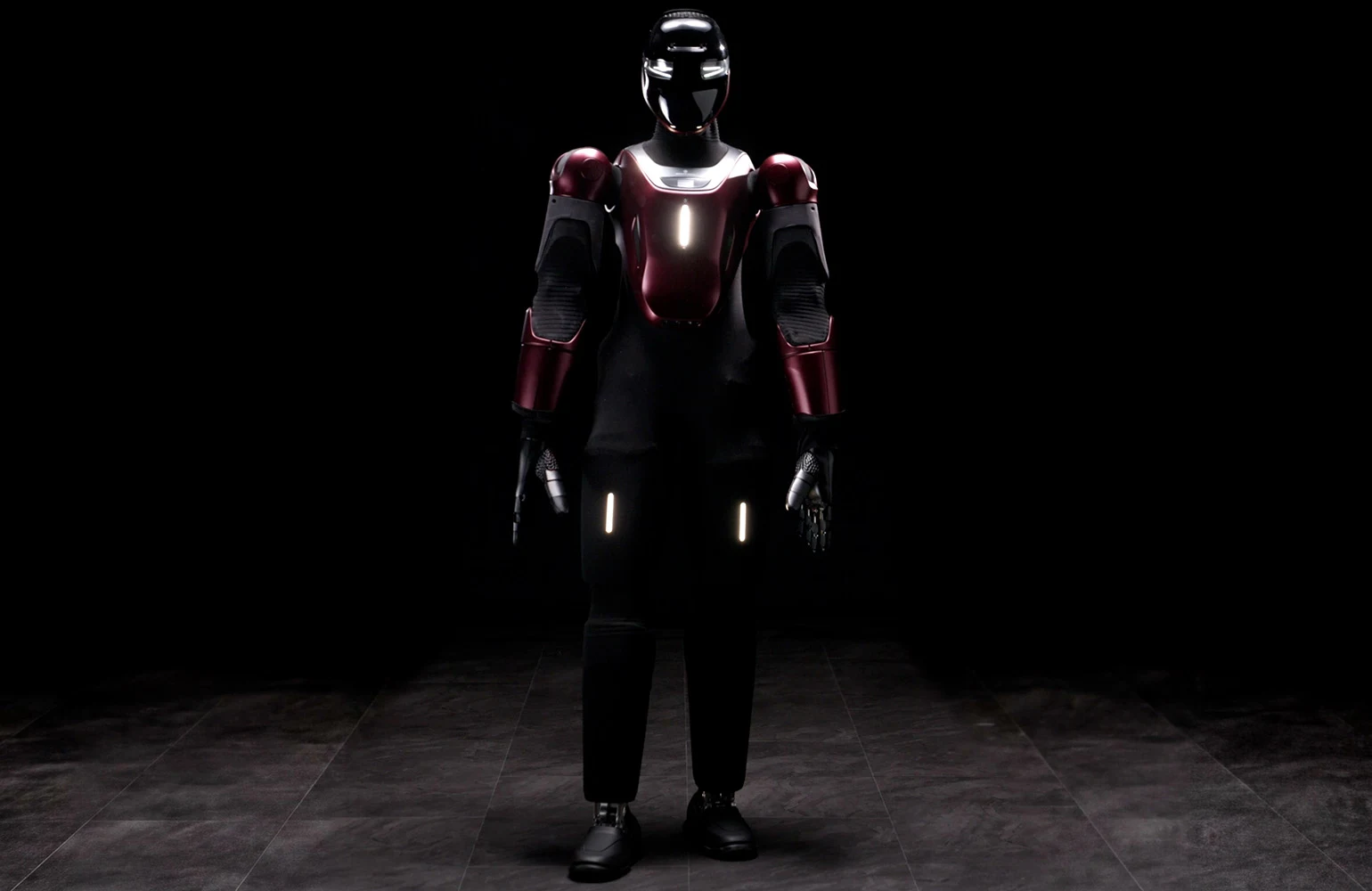
This week, the humanoid Gene.01 will be shown in the United States for the first time. Generative Bionics presented it at the AMD Advancing AI 2026 conference.
According to the company, the robot was assembled in six months. It combines full-body haptic perception with physics-based AI.
AI system as a whole
The artificial intelligence system that controls the robot combines its body, mechanics and brains. This allows Gene.01 to better understand and respond to the physical world.
“Unlike other humanoids that are made from a single template, Gene.01 is a scalable platform. It is customized for a specific customer at the level of AI, design and end effectors,” said Daniele Pucci, CEO of Generative Bionics. “This is the first embodiment of our idea: physical AI should be human-aware from day one, based on the laws of physics and be industrial.”
“In six months, our team went from concept to a fully functional, sensor-equipped platform. “We combined deep expertise in humanoid robotics with AI, biomechanics and design,” he added. - Our goal is to give people robots that feel, touch and learn from the physical world. And they adapt to the specific industrial tasks of each customer.”
The company is developing the first industrial scenario for the platform together with Fincantieri, a world leader in shipbuilding. We are talking about work in shipyards.
In addition, Generative Bionics opens up the original Gene.01 model. Physical AI developers will have the foundation to build industry-specific applications.
Tangible human-robot interaction
The company says Gene.01 was designed to interact with people, not isolate. The robot is covered with tactile skin distributed throughout the body.
It recognizes touch, temperature, proximity and pressure. This helps to anticipate a person’s appearance and respond before and during contact.
This approach, according to the developers, makes interaction safer and more natural. Force sensors allow you to teach the robot tasks by showing not only the movement, but also the required force.
Generative Bionics says this capability solves problems that video-only training fails to address. For example, exactly how you need to squeeze an object to hold it.
Physical AI as a single system
Gene.01 is powered by proprietary physics AI from Generative Bionics. The company emphasizes that instead of designing hardware and control separately, the platform initially optimizes how the robot moves, feels and interacts with people.
The architecture uses models of both the robot itself and its human partner. It tunes mechanics and motor intelligence together, focusing on measurable indicators like ergonomics and gait stability.
The result is a robot designed to work safely and efficiently alongside a human, rather than just do autonomous tricks.
The digital twin Gene.01, according to the company, is made not just open, but accessible. The humanoid model is published and supported in those channels that physical AI developers are already using: PyPI, conda-forge and the official ROS build farm.
One pip, conda or ROS command and Gene.01 drops right into your existing AI, simulation or robotics environment. Developers can start working with it right away.
Platform for mass production
Gene.01 will become the basis for a whole family of highly specialized humanoids, Generative Bionics says. For each application, the company plans to customize the platform at three levels:
adapt AI to the target task;
change the external design to suit operating conditions;
replace the end effectors - arms and legs - depending on how the robot will be used.
This platform approach, according to the company, is the key to mass production. You can produce one basic platform in large quantities, and then sell many customized versions of it to different industries.
These include logistics, manufacturing, public safety, inspection and health care. Cooperation with Fincantieri is the first industry platform configuration for a specific task. We are talking about a welding humanoid for difficult conditions in shipyards.
European Physics AI Ecosystem
Genoa-based Italian company Generative Bionics said it intends to contribute to the creation of a sovereign physical AI ecosystem, drawing on Europe's industrial capabilities. According to the developers, the main differences of this system are human-centric design, strict compliance requirements and reliable supply chains.
To achieve this goal, Generative Bionics has teamed up with Synapticon, a German actuator specialist from Schöneich. Together they create an EU-protected drive stack for a line of humanoids, starting with the Gene.01 model.
The collaboration covers final assembly in Europe, calibration, safety testing, and development of integrated actuators to meet the mechanical, thermal and control requirements of Gene.01.
Generative Bionics is based on more than twenty years of research, prototyping and creation of humanoids at the Italian Institute of Technology (IIT). The company spun off from IIT in 2024 and received exclusive licenses for key technologies from the institute.
At the end of 2025, Generative Bionics raised €70 million ($81.2 million). The company explained: these funds will be used to refine the product, train physical AI systems and build the first production plant.