How to choose a robotic wet vacuum cleaner that's right for your home
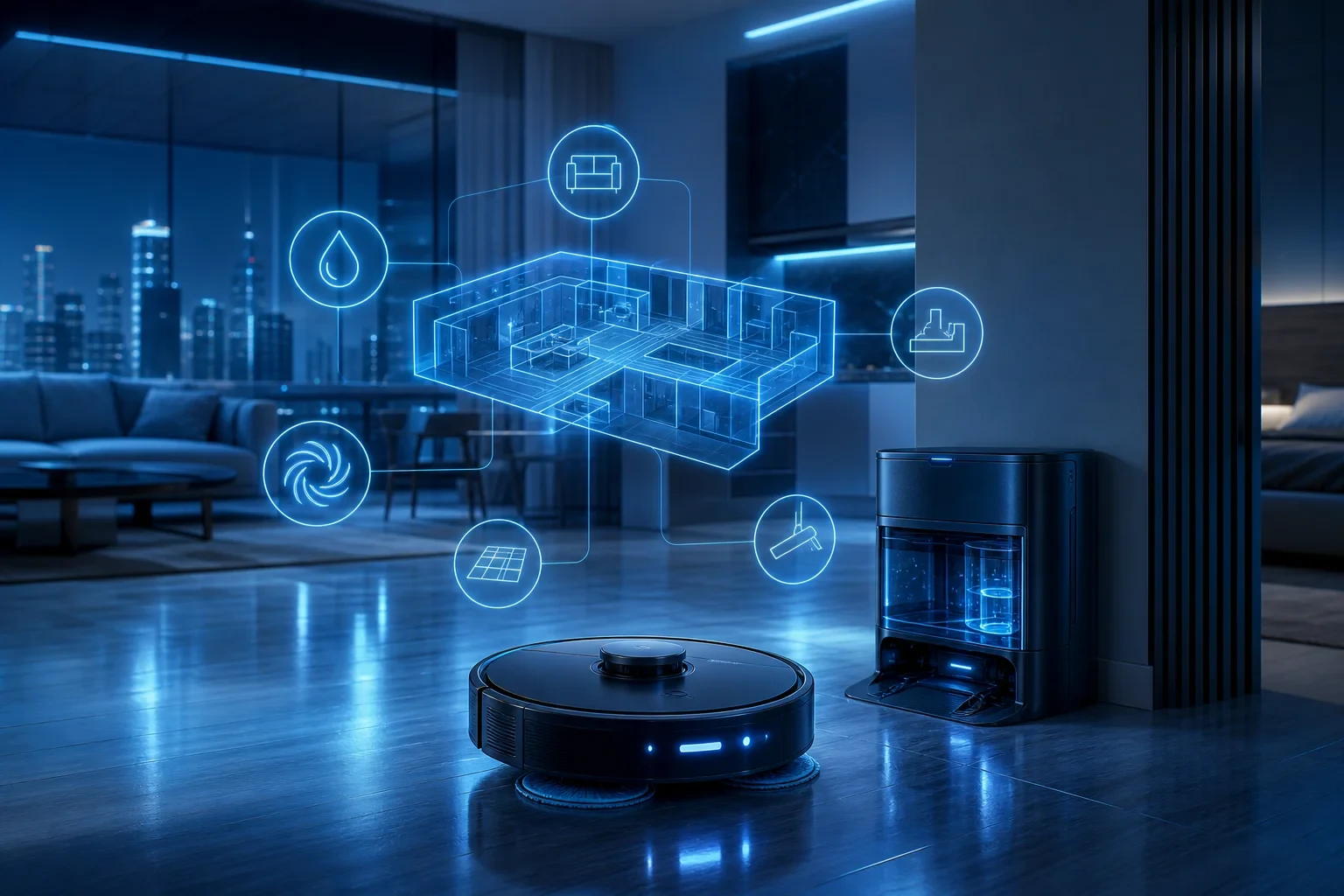
English translation from Unibot. Source published 2026-07-05.
Wet robot vacuum cleaners have evolved from a fun toy to a truly useful device. But the market is oversaturated, and advertising screams louder than the devices themselves.
Two models at the same price can behave completely differently in a real apartment. And those characteristics that make headlines are not always important for the cleanliness of your floors.
In order not to make a mistake with your choice, you need to understand several key features. They are the ones who distinguish the equipment you can rely on from the one that collects dust in the closet.
Main conclusions
The wet cleaning mechanism is more important than the suction numbers - it determines how clean hard floors will remain.
Select a robot based on the type of coverage. Especially if you have parquet or other delicate surfaces.
Navigation and mapping are what decide how thoroughly and consistently the device will clean every time.
Self-service functions show how much routine work the robot will take on and how much will go to you.
Start with how she washes, not vacuums.
Almost any robot vacuum cleaner today handles dry dirt just fine, so suction performance is rarely a deciding factor. But the wet cleaning system is where the machines really differ.
A static cloth, which is simply dragged behind the body, only lightly wipes the floor. But rotating or vibrating nozzles press harder and scrub away stubborn dirt.
The best systems have another trick: they lift the napkins when they sense the carpet. So that the wet rag does not crawl along the rug. If clean hard floors are the main reason you want a combination machine, the design of the wet mopping module is worth looking at first.
Water control
How the machine controls the water flow is part of the same issue. Look for an adjustable flow rate so you can pour more on tiles and less on delicate surfaces. And a system that moisturizes and does not flood. Because puddles are the main enemy of most hard floors.
Choose a car to suit your gender
The right choice depends greatly on what your floors are made of. In a studio apartment with sealed tiles, almost any option will do. But if the coatings are different, then caution is needed.
The most striking example is houses with trees. The robot vacuum cleaner for parquet is configured to protect the finish: softer brushes, less moisture, and no puddles that can cause damage to the wood.
If you have solid wood, engineered wood or laminate, compatibility is not a nice bonus. It determines whether the machine will clean the floors or slowly destroy them.
Thresholds and transitions
Don't forget about little things like the geometry of the rooms. If there are thresholds or junctions of different surfaces between rooms, check how high the robot can climb and whether it can distinguish surfaces from each other. Otherwise, it will get stuck on the ledge or start washing the carpet.
Navigation is what makes it reliable
A machine that pokes into everything will sooner or later circle the room. But she skips areas, blocks the same places and fiddles much longer. Laser or camera mapping allows the robot to create efficient routes, avoid missing anything, and remember the layout between cleanings.
Good navigation also opens up features that people actually use every day: cleaning one room on command, setting restricted zones around bowls or wires, scheduling cleaning of different zones on different days.
In an apartment larger than a studio, navigation quality is the difference between a machine you trust to run unattended and one you need to keep an eye on.
Do your homework before purchasing
Since real differences are difficult to deduct from a table of characteristics, it makes sense to compare models based on how you actually live.
An in-depth comparison of the best robotic wet vacuums is a quick way to understand how the machines actually differ in their wash module design, navigation, and service. Instead of collecting information bit by bit from the pages of individual models.
Look for reviews that focus on features that suit your home: flooring type, layout, pets, and rugs. And not those where they simply boast of the highest figures in the characteristics.
Don't forget about service
The combination machine also creates its own minor chores: emptying the container, rinsing napkins, adding water, cleaning the brushes.
The more of this the robot takes on, the less you remember about it. Docking stations that empty the dust bin, wash and dry rags, and refill water automatically turn a machine that needs attention every few days into one you go to once every few weeks.
For a washing robot, a self-cleaning base is especially important. Because a dirty wet wipe is unpleasant and essentially defeats the whole purpose of wet cleaning.
The right machine is the one that suits your floors
The best combo robot is not the one with the biggest numbers on the box. And the one whose washing system, compatibility with coatings, navigation and maintenance matches exactly your home.
Understand what surfaces he will have to clean, how much trouble you are willing to leave yourself, and how complex your layout is. And then choose based on these answers.
If you hit the mark, the machine will quietly earn its money. Get it wrong, and even an expensive device will collect dust rather than remove it.