Humanoid EngineAI T800 begins mass deliveries from Shenzhen base
English translation from Unibot. Source published 2026-06-01.
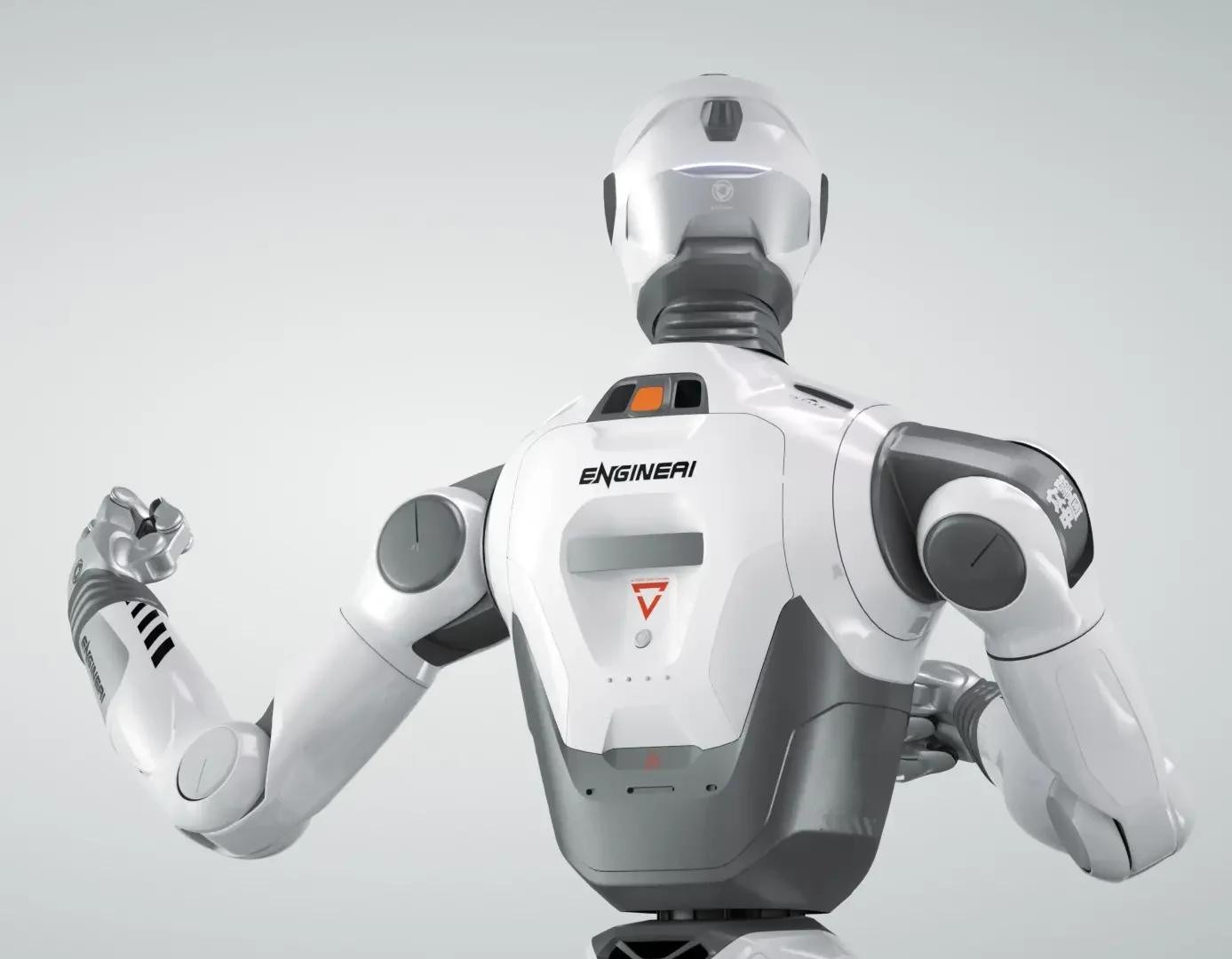
On May 29, EngineAI announced that the first EngineAI T800 humanoid robots rolled off the production line at its newly opened Intelligent Manufacturing Base in Honghualing, Shenzhen, marking the start of mass deliveries. The company described the launch as a transition from pilot production to industrial production: the site is designed to be able to supply up to 10,000 units.
EngineAI T800 humanoid production scaling
The Shenzhen base covers approximately 12,000 square meters and is organized as a closed production cycle. According to PRNewswire, which published the EngineAI announcement, the complex includes the acceptance and inspection of incoming materials, testing of assemblies and subassemblies, final assembly, output testing, bulk shipment and after-sales service. According to the company, this organization allows you to remove a new humanoid from the line every 15 minutes.
For the manufacturer of humanoids, this statement is important not so much as an advertising figure, but as a sign of the maturity of production. Moving from lab prototypes to repeatable releases requires process control, a wide range of testing, and supply chain discipline—something that many young humanoid robotics companies are still developing. EngineAI founder and CEO Zhao Tongyang said the company has moved from a first prototype in 2024 to low-volume production of a few hundred PM01 units in 2025 and is now targeting a much larger delivery phase.
How the Shenzhen base is built for capacity and quality
EngineAI says its manufacturing system is based on four key areas: supply chain quality assurance, manufacturing process design, digital manufacturing management and final testing. All components, from integrated hinges to assembled assemblies, must meet internal standards before they go into production. This emphasis reflects a broader problem in the humanoid robotics industry, where failures of actuators, gears or electrical connections can quickly undermine reliability in the field.
In production, the company says the introduction of automated clamping, gluing and laser welding units has increased production efficiency by approximately 40% while maintaining standardized processes. The press release also mentions a digital control system that assigns each component and assembled robot a unique manufacturing identifier, ensuring traceability throughout the production chain. For operators and enterprise customers, this traceability is important as robot fleets move from demonstrations to real-life operation and maintenance cycles.
Testing remains another key element of the company's approach. EngineAI says each robot must pass 79 quality checks and 46 simulated operating conditions tests before shipping. The release does not provide a breakdown of these tests by subsystem or use case, but the numbers provided indicate a desire to position the T800 program around repeatability and consistency of results, rather than a single demo benchmark.
What does the launch of T800 mean for EngineAI?
EngineAI describes the T800 as a full-size humanoid robot designed for dynamic, heavy-duty work environments. The release does not provide detailed technical specifications - payload, operating time, speed or customer deployment scenarios - so the commercial profile of the first batch of delivered machines remains unclear. However, the company is clearly positioning the T800 as its industrial product, distinct from earlier platforms such as the SA01, SE01 and PM01.
EngineAI also announced expansion of production capacity in Shenzhen, Henan Province and other locations to more rationally allocate capacity and quickly respond to market demand. Co-founder Ren Guowuen noted that these sites are designed to support future global growth. The company added that it collaborates with partners in the areas of commercial services, education, scientific research and industrial production, but the names of clients and order volumes were not indicated in this release.
Industry context of the new production base
For the humanoid robotics sector, the Shenzhen launch is notable for its emphasis on manufacturing infrastructure rather than a new demonstration of walking or manipulation. Many companies have demonstrated skills in locomotion, manipulation, or balance, but few detail how they plan to scale production, testing, shipping, and servicing of robots. EngineAI's announcement indicates that factory engineering and after-sales support are becoming part of the competitive advantage as companies move toward real-world deployments.
The next question is whether the stated production capacity translates into sustainable customer demand and reliable field operation.
This announcement shows that EngineAI is investing in the systems needed for mass delivery of humanoids, but the market will be closely watching for confirmation in the form of specific deployments, application fit, and actual operational results once the T800 rolls off the production line and into real-world use.