Humanoid robots: the future of robotics and their impact on society
English translation from Unibot. Source published 2025-09-03.
What is a humanoid robot?
Humanoid robots are high-tech machines designed to mimic the behavior, appearance and cognitive abilities of humans. These robots combine artificial intelligence, mechanics, biomechanics, machine learning and sensor technologies to replicate the physical forms and behavioral patterns of the human body. Equipped with cameras, sensors and specialized AI-based software, humanoids are capable of recognizing faces, responding to voice commands, conducting dialogues and demonstrating a wide range of emotions and natural movements.
How will humanoids change the world?
The prospects for the introduction of humanoid robots lie in their flexibility and ability to easily integrate into a familiar human environment. Unlike traditional stationary industrial robots, designed for a narrow range of tasks, humanoids can perform a variety of roles in almost any industry and everyday life. They take on monotonous, dangerous or physically demanding responsibilities, freeing people up for creative and intellectual activities. This creates the preconditions for increased productivity and improved safety in areas such as industry, logistics, medicine and care for the elderly.
In addition, the introduction of humanoids promises to significantly improve the quality of everyday life. Such robots will be able to help with household chores, care for the elderly, provide emotional support and maintain social contacts. Experts estimate that the humanoid robotics market will reach $38 billion by 2035, highlighting the importance and prevalence of these technologies in the future.
Practical significance of humanoids
A particular advantage of humanoid robots is that they are designed to operate specifically in human-centered environments without significant infrastructure changes. Their size and dexterity allow them to use tools, wear protective clothing, and move around in spaces designed for humans. This adaptability opens up opportunities for their application in emergency situations, medicine, industrial production and service sectors.
In addition, the similarity of humanoids with the appearance and behavior of humans contributes to the social acceptance of such robots by society. People tend to naturally interact with machines that resemble humans in appearance and behavior. This factor is especially important in healthcare settings, nursing homes and customer service settings, where it is important to show empathy and communicate effectively.
Examples of humanoid use today
Today, humanoid robots are already actively used in pilot projects and commercial practice in different countries:
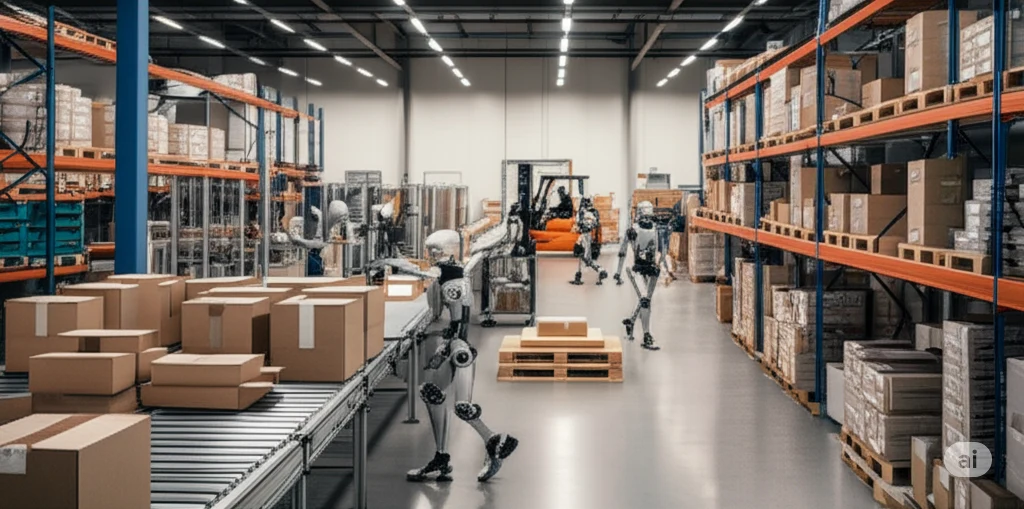
Logistics and Manufacturing: Humanoids help automate cargo movements and perform routine tasks, reducing the risk of employee injury and increasing overall plant efficiency. For example, Amazon is testing the humanoid Digit, developed by Agility Robotics, to transport e-commerce containers.
Medicine and rehabilitation: Humanoids are used to physically rehabilitate patients and provide care to the elderly. Fourier Intelligence develops specialized solutions used in more than 40 countries around the world.
Entertainment: Humanoids such as Ameca from British firm Engineered Arts are equipped with realistic facial expressions and interactive features used in exhibitions, events and the film industry.
China: The country is experimenting with the use of humanoids in a wide range of areas - from sorting garbage and delivering medicine in boarding houses to patrolling streets with police officers and accompanying tours in museums. Similar projects are also carried out in the military sphere.
Leading countries and technological progress
The development of humanoid robots is concentrated mainly in the United States of America and China, which are the dominant players in the global market and the leader in technological innovation in this field.
USA: Leading US companies such as Tesla, Boston Dynamics, Agility Robotics and Apptronik are creating multifunctional humanoids for the industrial, commercial and logistics sectors. One striking example is the development of Tesla Optimus, a multi-purpose robot designed to perform a wide range of tasks and currently under active development.
China: China is rapidly moving forward and is considered by many experts to be the world leader in the race to develop humanoid robots. The Chinese government is providing significant financial support and investing heavily in the development of artificial intelligence and robotics, striving to achieve a leading position in the global market. According to forecasts, by 2025, China will become the manufacturer of more than half of all humanoid robots produced in the world. Among the pioneering companies in the Chinese industry are Beijing HRIC, AgiBot, EngineAI, Fourier Intelligence and Unitree Robotics, which create humanoids for industry, medicine, space research and military needs. China accounts for two-thirds of the global patent market for robot-related technologies and has nearly 720,000 enterprises operating in this field.
Other countries playing a prominent role in the development of humanoid robotics include the UK, known for its companies like Engineered Arts, which creates ultra-realistic humanoids for entertainment and scientific research, and Canada, which has seen an active growth in the number of innovative projects in this area.
Ready-to-sell humanoid robots
A number of humanoid robots are already on the market or are close to launching mass production:
Optimus (USA): a universal humanoid robot from Tesla, designed for a wide range of industrial and commercial tasks. The current stage of the project involves testing and developing new capabilities.
Apollo (USA): a humanoid machine created by Apptronik for collaboration in logistics, manufacturing, healthcare and hospitality. The device is used in conjunction with Amazon to optimize processes in warehouses.
PM01/SE01 (China): Extremely realistic humanoids with enhanced mobility and agility designed for businesses, researchers and developers. The start of sales is scheduled for early 2025.
Tiangong (China): Beijing HRIC's humanoid robot is designed for industrial and commercial use and suits the rapidly developing Chinese robotics market.
GR-2 (China): a robot developed by Fourier Intelligence specifically for medical rehabilitation and already used by clients in more than 40 countries.
Ameca (UK): Known for its photorealistic facial expressions and ability to interact with people, this humanoid is used in exhibitions, research projects and the media space.
These examples demonstrate the level of advances in modern engineering and demonstrate how far artificial intelligence and robotics technology have come.
Conclusion
Thus, the advent of humanoid robots heralds a new era of technological advancement that promises to transform the global economy and people's daily lives. Thanks to the leadership positions of the USA and China, the industry is developing at a rapid pace, gradually becoming part of our reality. These machines will become more and more functional and affordable, turning into integral assistants in the workplace and in everyday life. The future of humanity is obviously closely connected with the cooperation of people and humanoid robots, harmoniously complementing each other in a wide variety of life circumstances.