Hyundai Motor Group plans to deploy 25,000 Atlas humanoid robots
English translation from Unibot. Source published 2026-05-20.
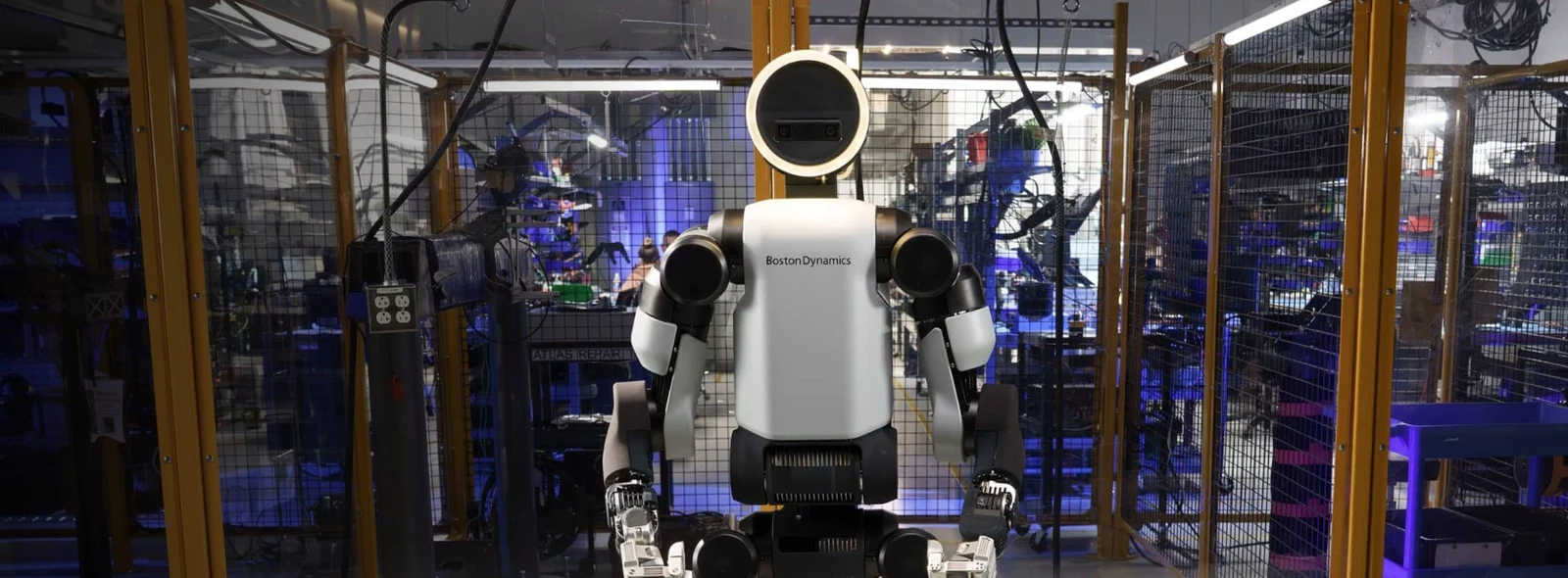
Hyundai Motor Group said it plans to deploy more than 25,000 Atlas humanoid robots, developed by subsidiary Boston Dynamics, at Hyundai Motor and Kia manufacturing sites, according to investor materials released Tuesday. The plan combines an ambitious domestic deployment goal with U.S. production goals for both the robots themselves and key components, including humanoids in the group's official production roadmap rather than relegating them to a limited pilot project.
The plan was presented during an investor session hosted by JPMorgan Chase. Hyundai Motor Group aims to reach an annual production capacity of 30,000 Atlas robots by 2028, according to The Korea Times.
Hyundai also announced its intention to deploy more than 25,000 robots across Hyundai Motor and Kia production sites. The group has not provided a detailed rollout schedule or indicated which factories, other than its Georgia facilities, will receive the systems, so the timing and distribution of units remains uncertain.
Despite these gaps, the scale of the goal is drawing attention as Hyundai positions humanoids as part of its key factory strategy. The original text describes a step-by-step implementation of robots to integrate them into the group's core production processes, implying a broader operational role than a single demonstration in a research environment.
In parallel with the deployment of robots, Hyundai Motor Group announced its intention to produce more than 300,000 execution modules (actuators) per year at plants in the United States. The company described actuators as key components of robots, serving as joints and “muscles,” making them central to the Atlas drive system.
Investor materials referenced in the report also indicate production of key robotics components in the United States. This is important because the plan goes beyond buying finished units from the robotics subsidiary—it includes building up the parts supply base needed to support higher production volumes and continued use in factories.
The article does not specify which American factories will produce the actuators, how production will be distributed between sites, or whether these components will be used exclusively for the Atlas. There is also no data on costs, throughput targets for specific factories and work cells where humanoids will be the first to be exploited.
The most specific timeframe for the site in the report concerns the state of Georgia. During recent overseas roadshows, Son Ho-sun, CEO of Kia Corp., laid out plans to deploy humanoid robots at Kia's Georgia plant in 2029, following an initial rollout at Hyundai Motor Group's Metaplant America facility in Georgia in 2028.
The sequence indicates that Hyundai expects its U.S. operations to become the primary testing ground for the broader Atlas humanoid program. It also suggests a phased rollout model, with one plant starting early and a second Georgia site following a year later.
The report does not specify what specific production tasks Atlas will perform at each site. Without this data, it is too early to tell whether the first deployments will focus on materials handling, line support, or other production roles, and how great the need for human supervision will be in the early stages of operation.
For the humanoid robotics sector, Hyundai's announcement stands out because it ties robot production capacity, component manufacturing and internal plant placement into a single unveiled plan. The stated goal of 30,000 Atlas units in annual production by 2028 goes beyond a simple technology demonstration and raises the question of whether Boston Dynamics and Hyundai can turn the humanoid platform into a replicable factory solution.
The next important step will be to publish plant-level schedules, task assignments, and performance metrics as 2028 approaches. Until then, Hyundai Motor Group had made clear its intention to introduce the Atlas into automotive production at scale, but many of the practical details needed by operators and suppliers remained unknown.