LimX Dynamics presented modular robot TRON 2
English translation from Unibot. Source published 2026-10-27.
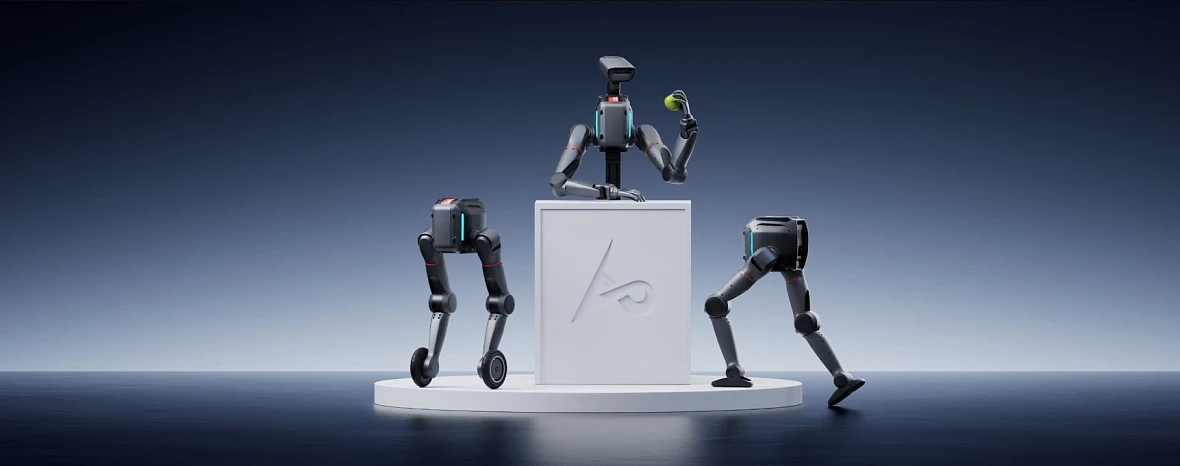
LimX Dynamics has released TRON 2, a modular robot that changes configuration on the fly. The platform combines two-armed, bipedal walking and wheeled options.
Why modularity is needed
The robot was created for research, training and industrial prototypes. This gives laboratories several experimental designs on one platform. For universities and robotics teams, modularity is a way to explore different configurations without purchasing separate hardware for each.
Characteristics and hardware
The height of the robot is 132 cm, weight is 35 kg. The maximum speed reaches 18 km/h, the force is 10 kg, and the robot operates for four hours on one charge.
Aluminum alloy and plastic hide LimX's proprietary electric joint actuators inside. Each arm has seven degrees of freedom. Standard grips have two fingers, but optional dexterous hands have five. RGB depth cameras are located on the head, waist and wrists.
What it can do in practice
The robot can avoid obstacles, get up after falling, walk up stairs and sort goods. Together, this lays the foundation for the study of mobility and simple manipulation in science.
Obstacle avoidance helps test movement among physical barriers.
Walking along the steps allows you to explore the transitions between floors.
Standing up after falling adds a dimension to the study of locomotion - teams watch how the robot returns to vertical when it loses balance.
Sorting provides a specific task for evaluating object workflows.
All these functions are suitable for rigorous experiments. Researchers first evaluate navigation and manipulation separately and then study their interaction in a shared environment.
Software and embodied AI
Shenzhen-based LimX Dynamics released the robot in December 2025, following the first version of the platform. The point of the machine is to combine customizable hardware with tools for the development of embodied AI.
The Linux-based system runs ROS 1 and ROS 2. The EDU configuration includes an Intel Core Ultra development module and 2 TB of storage. Wireless VR teleoperation and integrated VLA data pipeline help connect operator actions to model development.