Norwegian robot versus Chinese giant: is it real?
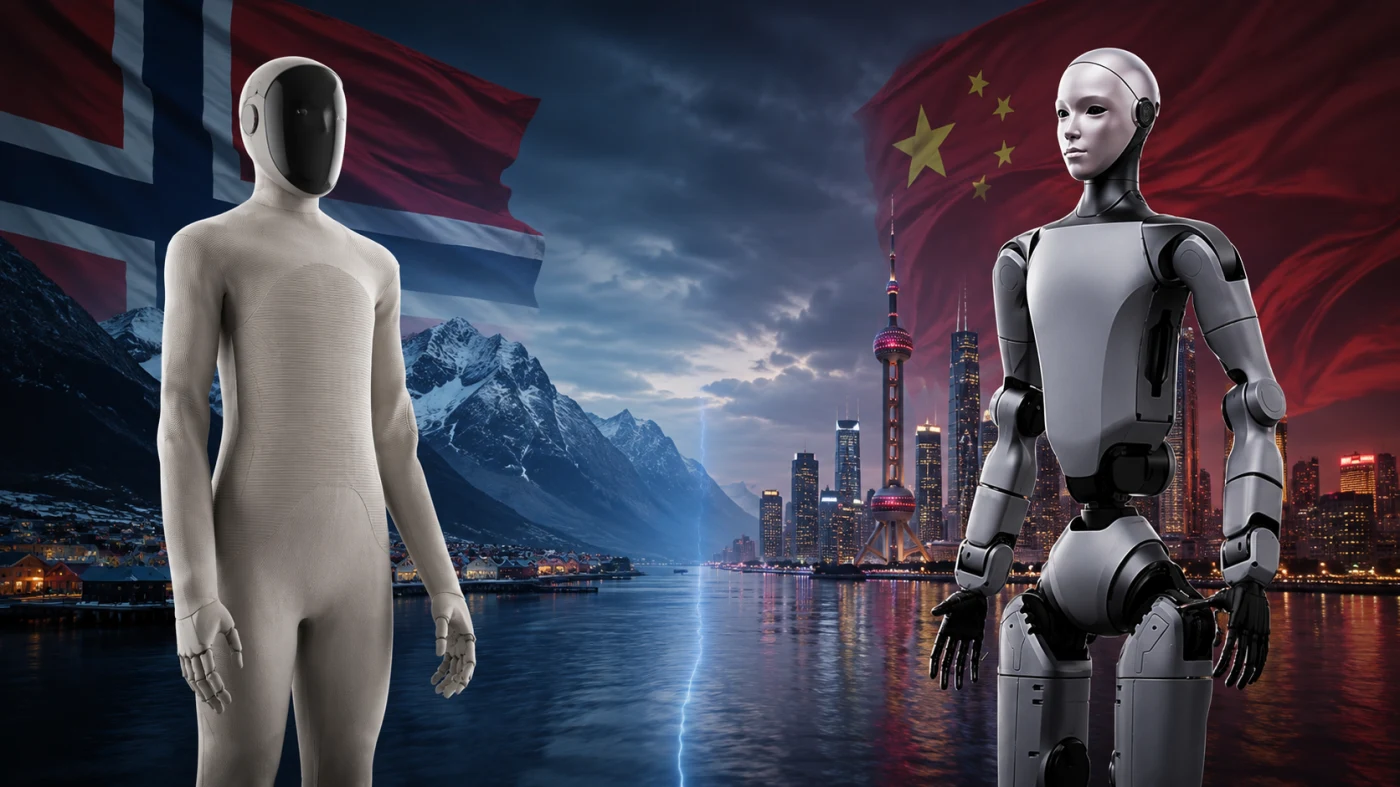
English translation from Unibot. Source published 2026-06-30.
Market Analysis: 1X opened NEO to Western developers the same week the Pentagon blacklisted Unitree. We wondered whether a relocated - and partially remotely controlled - home robot could replace the company that has surpassed Tesla in shipments.
The moment was not chosen by chance
On June 8, 2026, the Pentagon added Unitree, the most famous Chinese manufacturer of humanoids, to the list of Chinese military companies that already included Alibaba, BYD and Baidu. This status entails a ban on US defense contracts, which takes effect on June 30.
And a few days later, 1X founder and CEO Bernt Bernich announced that the company would accelerate plans to transfer its humanoid NEO to developers. According to him, having a normal platform for humanoids in the West was “too important... to keep it locked up.” He published this as a direct response to the very Congressional committee that sounded the alarm about Unitree.
In other words: while Washington was building a wall around the Chinese robot champion, a Western competitor raised its hand and said: we will become your platform.
This is a really important point for the humanoid market. But it's worth asking the ugly question behind the patriotic rhetoric - can 1X really deliver on its promise?
Head to head
1X NEO
Norwegian Origin, American Made
60-70% autonomy at the start; the rest are remote operators in “expert mode”
OpenAI support plus a growing array of home data
First deliveries - end of 2026
Unitree
Government support, large volumes
More than 5,500 humanoids shipped in 2025 - more than Tesla
IPO in Shanghai for $610 million; about half will go to AI training
On June 8, 2026, added to the Pentagon's list of Chinese military companies; The ban comes into force on June 30
The window of opportunity is real
It's not just about displaying the flag. Unitree's most trusted clients are universities and research laboratories. And it is this developer base that now faces procurement challenges, export restrictions and institutional risk aversion in the West. A non-Chinese platform, not affiliated with the PLA, suddenly had a viable niche to enter.
If you look more broadly, the picture is familiar: the humanoid market is beginning to split into Western and Chinese stacks - as previously happened with semiconductors, telecoms and batteries for electric vehicles. Burnich's pivot to developers is an attempt to secure the default platform on the west side of this line before someone else takes it. Whoever owns the developer ecosystem owns the decade - this was the case with iOS and Android, and the stakes here are the same.
About the “Norwegian” robot
There is one nuance that patriotic rhetoric usually ignores: how Norwegian is 1X really?
Her roots are real. The company was founded in 2014 by Norwegian engineer Bernt Bernich under the name Halodi Robotics, and still has production in Moss and R&D in Norway. But in mid-2025, it consolidated its Norwegian and Sunnyvale teams into new headquarters in Palo Alto, and NEO is now assembled at a plant in Hayward, California. Honest wording - Norwegian origin, American production.
And this American production is not an annoying detail, but the whole point. 1X's answer to China's manufacturing advantage is internal vertical integration: manufacture drives and key components in-house, manufacture in the US, quickly iterate based on real feedback, and avoid the offshore supply chain risks now punished by the military designations regime. Norwegian blood, American decision. In the story of Western technological independence, relocation is the main point, not a footnote.
Tireless Giant
Now comes the sobering part. In 2025, Unitree shipped more than 5,500 humanoid robots, surpassing Tesla in this indicator. Their cars dance at CCTV's Spring Festival Gala in front of hundreds of millions of viewers. The company is in the process of IPOing on the Shanghai Stock Exchange for about $610 million, with nearly half of the funds reserved for training AI models over the next three years. On top are government subsidies, tax breaks and funding from civil-military integration programs that Western competitors simply cannot replicate.
So the label “giant” is deserved. This is a company with production volume, capital, brand recognition and the state behind it.
Embarrassing Truth
Now for the part that launch day excitement usually bypasses: NEO is not yet a fully autonomous robot.
According to 1X’s own estimates, at launch NEO operates approximately 60-70% autonomously. In other cases, operators in “expert mode” connect remotely - through VR helmets, seeing the image from the robot’s on-board cameras - to complete tasks that AI cannot yet cope with on its own. When a Wall Street Journal journalist tested a sample, it took about two minutes to fold a shirt, and more than a minute to get a bottle of water from a refrigerator three meters away. And most of the time the robot was controlled remotely, rather than autonomously.
The West's "answer" to a company shipping thousands of humanoid robots is, so far, a robot that is partly the helmeted man in the building next door.
This isn't a jibe - all companies in this space are climbing the same autonomy curve, and 1X is unusually candid about its current position. But this changes the question. Today the competition is not between the “Western champion” and the “Chinese champion.” It's about whether the Western champion can close the autonomy gap before the Chinese rival's volume, subsidies and fresh IPO money become an insurmountable advantage.
Two ironies that are overlooked
Privacy is a double-edged sword
The main national security objection to Unitree is its "CloudSail" remote access feature: the idea that a machine in a sensitive US facility can "call home." But NEO's "Expert Mode" by design puts remote operators behind the cameras of a robot in your living room. Different threat models, completely different intentions - but the same basic concern: someone at a distance is in the control loop.
The supply chain is not yet broken
1X's own cost reduction plan relies on sourcing components at competitive prices, including from Asia. Complete separation from the Chinese supply base is a direction of travel, not a fait accompli. Not for 1X or anyone else in this race.
So can it?
The honest answer is: not yet, and that's exactly what the move with the developers is for.
By opening NEO to developers, 1X is borrowing roboticists from around the world to close the autonomy gap faster than it could on its own. And OpenAI's support and growing home data flywheel give it advantages that the specs don't capture. Whether the “Western humanoid platform” becomes a reality or remains a successful tweet depends on the speed of execution against the backdrop of a state-backed competitor that is not slowing down.