Rabbit robot remembers voices from the first greeting to take care of the elderly
English translation from Unibot. Source published 2026-06-16.
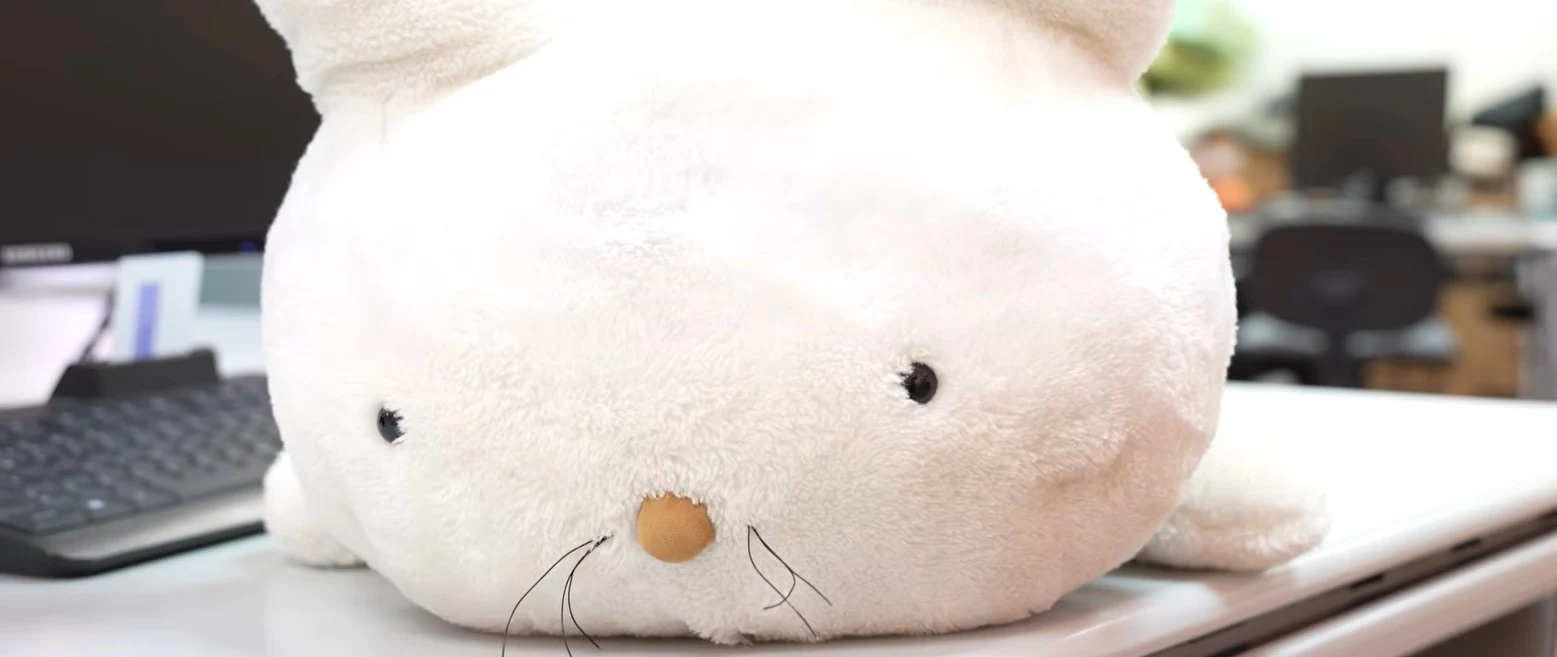
Researchers from the Carlos III University of Madrid (UC3M) have developed an AI-based technique that allows a companion robot to recognize people by voice from the first phrase. A prototype called Mia, which resembles a pet rabbit, is already being tested in day centers in Madrid for personalized stimulation for older people with cognitive impairment.
How a robot remembers voices
One of the main problems of social robotics is to make machines communicate with people naturally and taking into account the personality of the interlocutor. The new voice recognition system works right on board Mia and does not require cameras or cloud services.
“We are using this robot to provide affective stimulation to older adults with cognitive impairment,” says co-author José Carlos Castillo Montoya of the social robotics group Robotics Lab at UC3M. “Recognizing the user is an important step towards ensuring that the robot behaves in a personalized manner and adapts to the needs of each person.”
Conventional recognition systems rely on cameras and image processing. They require high computing power and often violate privacy. The new development uses only the robot's built-in microphone.
“The robot does not need a setup step to remember your voice,” explains another study author, Arecia Segura Bencomo from the Department of Systems Engineering and Automation at UC3M. “It hears you speak for the first time and automatically creates a profile.”
The benefits of robotic animals
This breakthrough relates to the field of animal robotics. The therapeutic paradigm is: bring the proven benefits of therapy with real animals into a controlled environment. Where the welfare of the animal or the patient's ability to care for it limits the use of live pets.
“In the case of older adults with cognitive impairment, the robot activates the need to care for someone,” Castillo says. - In pilot tests in the day centers of the Madrid City Hall, we were convinced that in addition to improving mood, the robot acts as a social catalyst. It breaks down isolation, alleviates unwanted loneliness and encourages users to connect more with each other.”
AI-powered voice signature
The operating principle of the system imitates the human ability to learn. Every time someone speaks to the robot, the algorithm analyzes the nuances and patterns of the acoustic signal. This creates a unique “voice signature”.
“Our solution is simple because the robot's processing power is very limited,” explains Castillo Montoya. - The algorithm builds a kind of map and, using open code that we developed in the laboratory, groups similar signatures. As a result, each group corresponds to a specific user.”
The system can cope with unexpected situations in real time. If the robot interacts with a stranger, the AI discovers that his signature does not fit into any of the existing groups. If the dialogue continues, the system is able to generate a completely new dynamic profile - that is, it learns that this is a new user. In experimental tests, the software showed a high percentage of successful recognition of already famous people.
Personalization and the future of technology
This breakthrough paves the way for a new generation of affordable robot assistants and companions. They will be able to enter the house and independently remember all its inhabitants - just hear the first “good morning”. Researchers emphasize that technology opens up enormous opportunities for personalization.
“We want the robot to be able to adapt and react differently depending on who is in front of it,” Castillo explains. “If it recognizes a specific user who is prone to anxiety, special mechanisms and behavioral scenarios will automatically turn on to calm him down.”
The team now has several working prototypes of Mia. Here, scientists continue to hone the technology in real clinical conditions. At the same time, they are looking for partners among companies interested in adopting these developments and bringing such auxiliary platforms to the wider market.
More details
Arecia Segura-Bencomo et al., “User Recognition Methodology Based on Voice Biometrics and Dynamic Clustering for Social Robots,” Applied Sciences (2026). DOI: 10.3390/app16094548
Who is behind this story
Lisa Lock - BA in Art History, MA in Material Culture. Former museum editor, physician assistant and transplant coordinator. Edits Science X since 2021. Full profile →
Andrew Zinin - Master of Physics with experience in scientific research. Longtime science news enthusiast. Plays a key role in the editorial success of Science X. Full profile →
Link
A robotic rabbit learns to recognize users' voices the first time it encounters it, paving the way for personalized care for the elderly (2026, June 15). Retrieved from https://techxplore.com/news/2026-06-robotic-rabbit-users-voices-enabling.html (accessed June 16, 2026).
This document is protected by copyright. Except for fair use for private study or research, no part of it may be reproduced without written permission. The material is provided for informational purposes only.