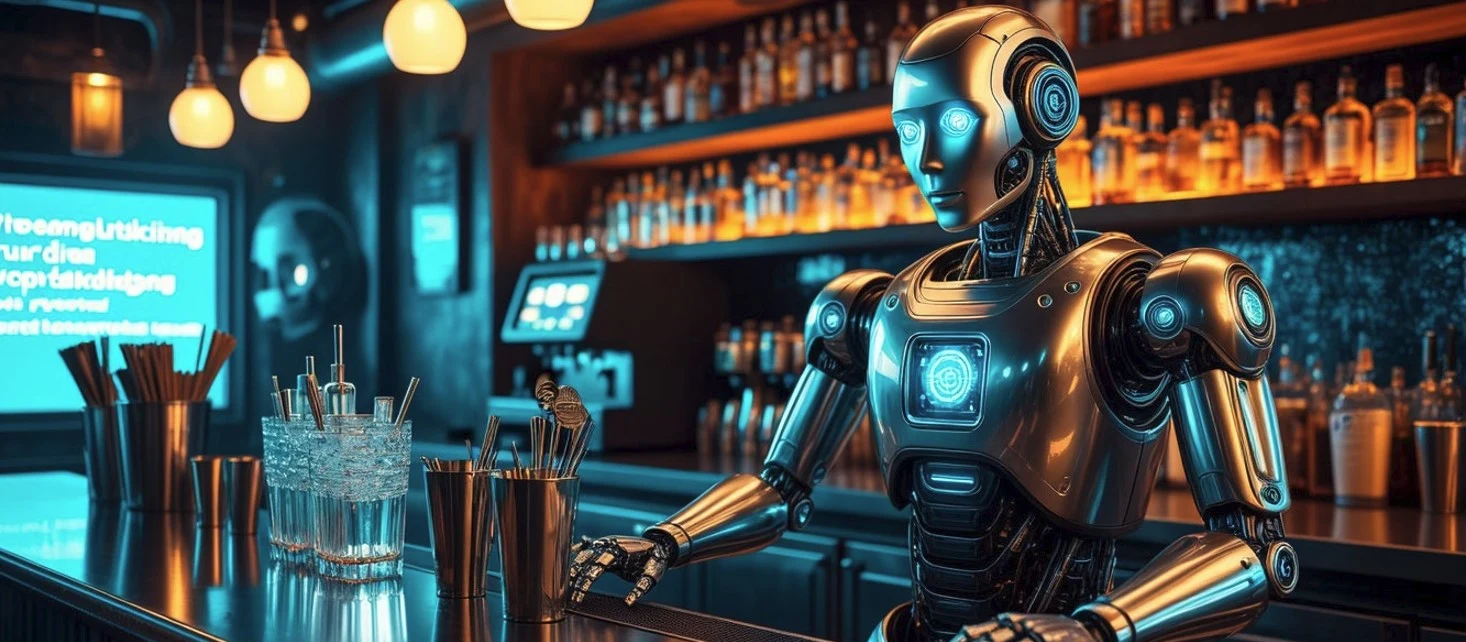
Robots pour cocktails and run marathons, but they're not good at multitasking.
English translation from Unibot. Source published 2026-06-20.
There is still a long way to go to a universal Android. They can mix cocktails, run marathons and fold laundry. But humanoid robots are not yet capable of performing many different tasks on command - no matter what marketers say.
Gap between promises and reality
The gap between promise and reality was easy to see at the Robotics Summit in Boston in late May. The glossy brochures promised one thing. The people who actually assemble these cars said something different.
Elon Musk loves to show off his Optimus prototype, which was recently filmed running in small steps. Figure 03, the third generation robot from Figure AI, can clean the living room on its own. China's AgiBot and Matrix Robotics say their robots can greet guests, serve coffee and give tours - much like C-3PO from Star Wars.
The reality is much more modest.
Remote control and narrow tasks
"Most of the humanoids you see are either remote-controlled or programmed to do a very narrow set of actions," says Chris Mathieu of RealSense, a startup that makes cameras for robots.
In other words, many are either led by a person with a remote control or are stuck on a single task.
Take Neo, the robot that 1X unveiled to great fanfare last October. It was touted as "the world's first ready-to-use humanoid robot for the home." But in reality it was controlled by the man standing next to him.
Progress through AI
However, there is progress - and it is driven by artificial intelligence. “I think AI has accelerated this growth incredibly,” says William Okazaki of sensor maker Renesas.
One of the main problems is hands. For a long time they remained the holy grail of robotics, but now things have moved on: robots can already grasp objects with a delicate touch, and some sensors even detect when they come into contact with human skin.
Much has become possible thanks to a new type of AI - the VLA (vision-language-action) model. It combines text instructions with what the camera sees in real time, so the robot associates what it looks at with what it should do.
There is also a “world model” - an AI that learns from huge amounts of images and videos until it begins to predict what will happen next in the real world. For example, how an object will behave if it is compressed.
Data Hunt
But an android capable of doing a little bit of everything is not a thing for the next few years. "General purpose robots will take longer," says Daniel Phan of Innodisk, which makes robot components.
Many humanoids are already working in the real world - Atlas from Boston Dynamics at the Hyundai plant, AEON from Hexagon Robotics at the BMW site. But these are tests, not finished products.
"Until you get a robot to actually do what you think it can do, you won't know the truth," says Charlie Kemp of Hello Robot, which sells robots for people with limited mobility.
Fully autonomous operation on an industrial scale is not yet possible - “because there is not enough data,” explains Xinrui Bi from AgiBot.
To collect them, companies install cameras everywhere and record human movements - from cooking in a home kitchen to working in a textile factory in India.
Security and unpredictability
The stakes here are higher than for a chatbot like ChatGPT. The robot operates in the physical world, and its mistakes can cause harm.
“If you want to go into the social sphere, a robot has to be absolutely safe for people around it,” says Valentino Fagar of Japan's XELA Robotics, which is working on developing a sense of touch for robots.
Engineers can set limits to prevent the machine from squeezing too hard or getting too close to a person. But there's a catch. Like chatbots, these AI systems do not always behave the same, which makes them unpredictable.
"The problem with the so-called world model or end-to-end VLA is that it's non-deterministic - it's a black box," says John Black of Brain Corp, whose robots perform very narrow tasks like mopping floors or checking store shelves.
“They are still a long way from achieving the required level of security,” he adds, because even the creators of these systems cannot fully understand why their creations act the way they do.