ROKAE supplied 10,000 force-controlled arms for humanoid robots
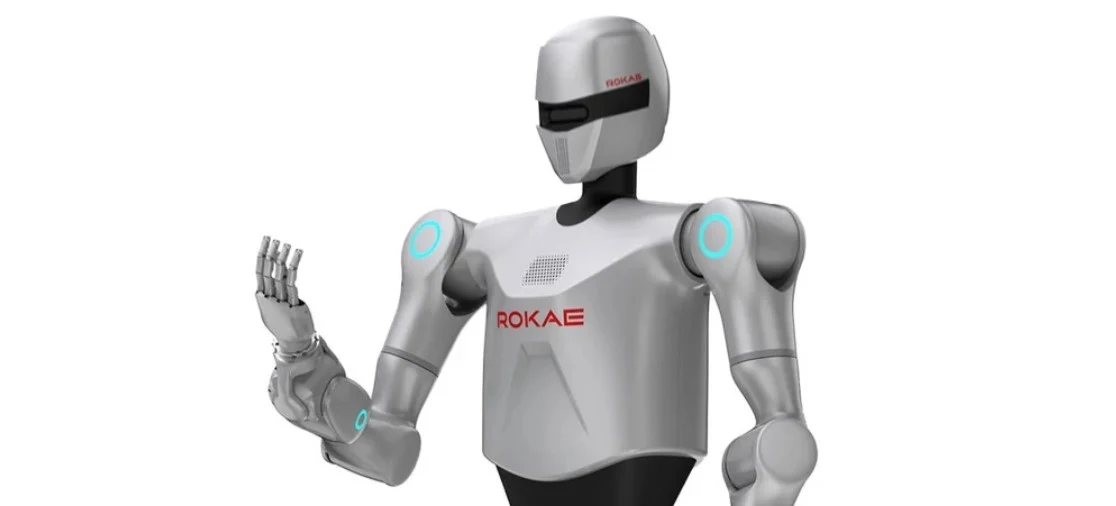
English translation from Unibot. Source published 2026-10-28.
Beijing-based ROKAE Robotics, a Hong Kong-listed arm maker, has reported delivery of its 10,000th force-controlled arm for humanoid robots. This is stated in a press release dated October 26, 2026. The milestone unit left the plant in Shandong province back in September.
Only arms for humanoids and dual-arm robots were counted. ROKAE industrial and collaborative manipulators are not included in these statistics.
The same release also names the first deployment location: five wheeled ROKAE Helios humanoids are working on an assembly line for the production of components for humanoid robots at the Schaeffler plant in Taicang, China.
Why is this important
Humanoids are usually considered to be entire robots in the news. And then they counted one of the parts that no such robot can do without.
According to ROKAE, more than 80 industrial partners have integrated its arms into their production solutions. It seems that a supplier market is emerging: robot manufacturers prefer to buy ready-made manipulators rather than design their own. This reduces development time and spreads out costs.
There is another nuance for the buyer: two robots under different brands can stand on the same hand. So it’s definitely worth asking whose hand it is.
The Schaeffler detail closes the gap
When Schaeffler opened its "lighthouse" factory in Taicang on October 20, the humanoid manufacturer on the line was not named. Now ROKAE says: Five Helios machines with AR series arms handle parts feeding, assembly and inspection there.
Humanoids Daily notes that Schaeffler's earlier coverage referred to six humanoids. Neither company has yet explained the difference.
What has been proven: the accumulated number of deliveries from the manufacturer itself and the named implementation at a specific plant. What is not disclosed: how supplies are divided between customers, how many arms actually operate in production, and how many gather dust in research laboratories.
There is no price for the manipulator, no delivery time, no load capacity for each model. The performance of the line in Taicang is also unknown, as is the frequency of operator intervention. The unit price has not been released for either the AR series or the Helios.
The affected scenarios are production: assembly, parts feeding and inspection directly on the line.
What does force control at the joint level provide?
A conventional industrial arm is position controlled. It is given a point, and it moves there - no matter what stands in the way. That's why most of these manipulators work behind fences.
A force-controlled arm measures the force or moment at each joint, most often with a built-in torque sensor, and uses this reading in a control loop. This opens up the so-called impedance control: the arm does not hold a fixed position, but behaves like a spring of a given stiffness. If you push, it will move by a predictable amount. If it encounters resistance, it will slow down, stop, or adjust.
A good example is fitting a bearing into a housing. When controlled only by position, a small displacement will jam the part or damage it. With force control, the arm feels the contact force growing, releases it and pushes the part sideways until it sits in place. The same feeling helps to notice in time an unexpected collision with a person.
ROKAE claims that in the AR series there is force control at each joint, and the MAC controller manages seven joints per arm, fourteen per pair and more than twenty per entire humanoid. True, the resolution and force accuracy are not specified in the release. But it is this figure that decides how much delicate work to entrust to the arm.
Aparobot's Take: Arm production volume is an earlier indicator of the state of supplies for humanoids than announcements of the robots themselves. But only on one condition. If manufacturers start telling how many units actually work in paid production.
What to ask the supplier
Of the ten thousand arms shipped, how many work in paid production, and how many went to customers from the field of research and development?
What force or moment resolution does each AR series joint provide and how often does it need to be recalibrated?
What version of Helios does Schaeffler have in Taicang and how often does the staff intervene per shift?
What is the delivery time and price of a pair of AR series arms with a MAC controller, if you take them without the whole robot?
Sources
ROKAE Robotics, “ROKAE delivers its 10,000th humanoid force-controlled arm,” PR Newswire UK, 26 October 2026.
Humanoids Daily, “ROKAE Reports 10,000 Humanoid Arms Delivered, Identifies Schaeffler Factory Deployment,” October 26, 2026.
ROKAE, Helios wheeled dual-arm robot product page, viewed October 27, 2026.
Aparobot, Helios robot card.