Southwest Airlines has updated its flight rules to ban humanoid robots.
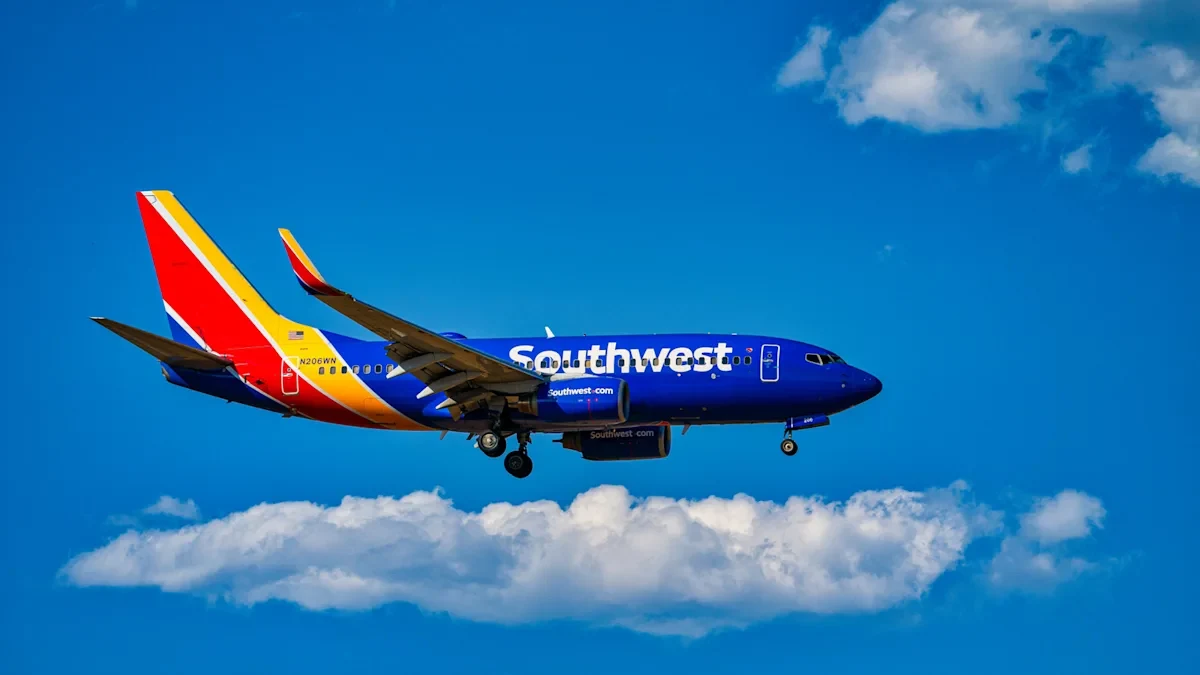
English translation from Unibot. Source published 2026-05-18.
Southwest Airlines has updated its transportation rules to ban humanoid robots, the Grants Pass Tribune reports, citing a May 17 story. The policy prohibits the presence of humanoid and animal-type robots both in the passenger cabin and in the cargo compartments, turning an exotic incident into an official operating rule for a major American carrier.
What does the ban on humanoid robots cover?
According to the publication, this restriction was quietly added to Southwest's security and baggage guidelines. It applies not only to the cabin, but also to checked baggage and cargo operations, and covers vehicles regardless of their size and purpose. This makes the policy broader than the normal carry-on baggage rule.
However, the article notes that Southwest has not banned all robotic devices. Small consumer electronics and compact robotic toys may still qualify as carry-on luggage, subject to current battery restrictions. The dividing line, the report points out, is whether the machine is designed to imitate human or animal form, movement or behavior in a realistic or interactive manner.
Passenger incident reveals gap in regulations
The article links the policy change to a recent on-board incident involving a humanoid robot. According to the Grants Pass Tribune, a Dallas robotics entrepreneur bought a seat for a humanoid robot named Stewie on a Southwest flight from Las Vegas to Dallas. Photos and videos of the car sitting next to the passengers quickly went viral on social media and turned the flight into a widely discussed aviation story.
This case appears to highlight a classification problem for airline crews. As the publication describes, staff had to decide whether to treat the device as cargo, electronic equipment, hazardous material or as a passenger occupying a purchased seat. For airlines whose rules and procedures focus on people, this uncertainty impacts security screening, boarding, seat assignments, emergency evacuation, and gate staff authority.
Battery safety is a key limiting factor
Southwest's concerns largely revolve around the risks of lithium-ion batteries. The source notes that modern humanoid robots can contain battery systems sufficient to power motors, sensors, cameras, processors and embedded AI software at the same time. In an airplane environment, this increases the likelihood of thermal runaway, a phenomenon considered by aviation safety experts to be a serious source of heat, smoke and fire.
The airline's case is more complex than with a conventional consumer device because humanoid systems combine stored energy and moving mechanical elements. It is noted that hidden battery packs and internal drives may be difficult for the crew to quickly assess during inspection or boarding. It also highlights the wider challenges that transport operators will have to deal with: passenger reactions, privacy issues associated with on-board cameras, and the behavior of AI cars in enclosed public spaces.
Implications for humanoid logistics
According to the article, this could be one of the first publicly known widespread restrictions by a major US airline aimed specifically at believable robots. For developers, operators and event organizers, the ban on humanoids is important because commercial air travel is often the easiest way to transport machines to conferences, exhibitions, sporting events, promotions and other public displays. If similar regulations begin to spread, logistics planning for humanoid movements may shift toward ground transportation or specialized cargo handling.
The industry's broader problem is that humanoid robots are starting to move out of laboratories and warehouses into everyday places, while transportation regulations still treat them as an exception. The Grants Pass Tribune reports that AI machines are becoming increasingly prominent in the hospitality, customer service, healthcare and home companionship industries, meaning transportation, storage and safety classification issues can no longer be ignored. Whether airlines will develop common standards or continue to handle such cases each in their own way remains to be seen, but Southwest's policy shows that transporting humanoids has become an operational problem, not a theoretical one.