UBTECH and Shenhao team up to create humanoid robots for power grids
English translation from Unibot. Source published 2026-07-11.
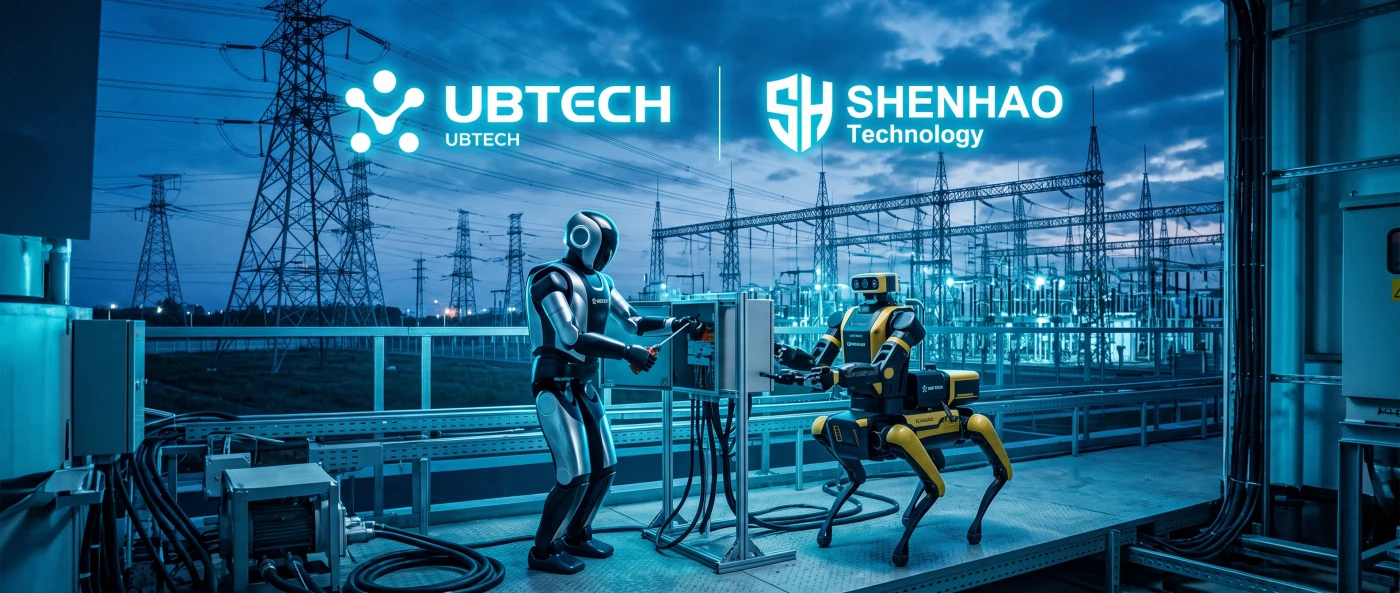
UBTECH Robotics and Shenhao Technology have signed a strategic partnership agreement. Their goal is the development and implementation of humanoid robots to maintain power grids. This is reported by Gasgoo.
Working together for energy
The work will be built around State Grid and China Southern Power Grid facilities. We are talking about substations and distribution points - two types of premises where access, safety and reliability of tasks place particularly stringent demands on mobile robots.
The companies are planning, as the source writes, a full chain of cooperation. UBTECH's humanoid robot technologies will be combined with Shenhao's experience in system integration and field implementation in the energy sector. Shenhao has two decades of experience in this field.
The partners also intend to create a Joint Innovation Lab for Embodied Intelligence for Energy. Its tasks range from technical verification to industry standards.
Serious test for robots
The stated list of tasks is much more specific than in usual announcements of inspection robots. At substations and distribution points, humanoid machines must independently move through narrow passages and climb stairs. At the same time, they will have to use multimodal sensors for infrared thermometry, searching for defects, switching operations and installing grounding conductors.
These tasks are suitable for humanoid robots precisely because jobs were created for people, and not for wheeled machines or stationary automation. Stairs, cramped corridors, cabinets, switches and tools - all this is designed for a machine that looks like a person. Provided, of course, that the robot can provide the required safety and reliability.
The source does not name a specific UBTECH model, does not disclose autonomy restrictions, and does not indicate a time frame for implementation. So it is difficult to judge the real maturity of the system from this report.
The argument for safety is obvious. Close inspection and standing near live electrical equipment puts people at risk. A robot that can perform routine checks and some physical operations without exposing staff to harm would have its place. But only if power engineers accept his failure scenarios and operating regulations.
Large early market in China
Gasgoo reports that State Grid has published its embodied intelligence roadmap for 2026. The document provides for the purchase of approximately 8,500 devices of embodied intelligence. The total investment is about 6.8 billion yuan (approximately $940 million).
With expected activity from China Southern Power Grid and regional utilities, the article says, energy sector investment in embodied intelligence could exceed 10 billion yuan (about $1.4 billion) this year.
These figures cover embodied intelligence devices in general, not just humanoid robots. And yet, the operation of energy facilities is a very real springboard for humanoid machines. Provided that developers can demonstrate repeatability of results during inspections, switchovers and emergency support.
The partnership also opens UBTECH's channel into a sector where domain knowledge, certification and system integration can matter as much as the robotic hardware itself.
The companies say they will also work on technical specifications and safety standards for the energy sector. For UBTECH humanoid robots, this work on standards may be no less important than the first implementations. It is unlikely that network operators will scale humanoid systems without clear rules for autonomy, remote supervision and safe operation near live equipment.