Weeding robot earns students victory in robotics challenge
English translation from Unibot. Source published 2026-07-19.
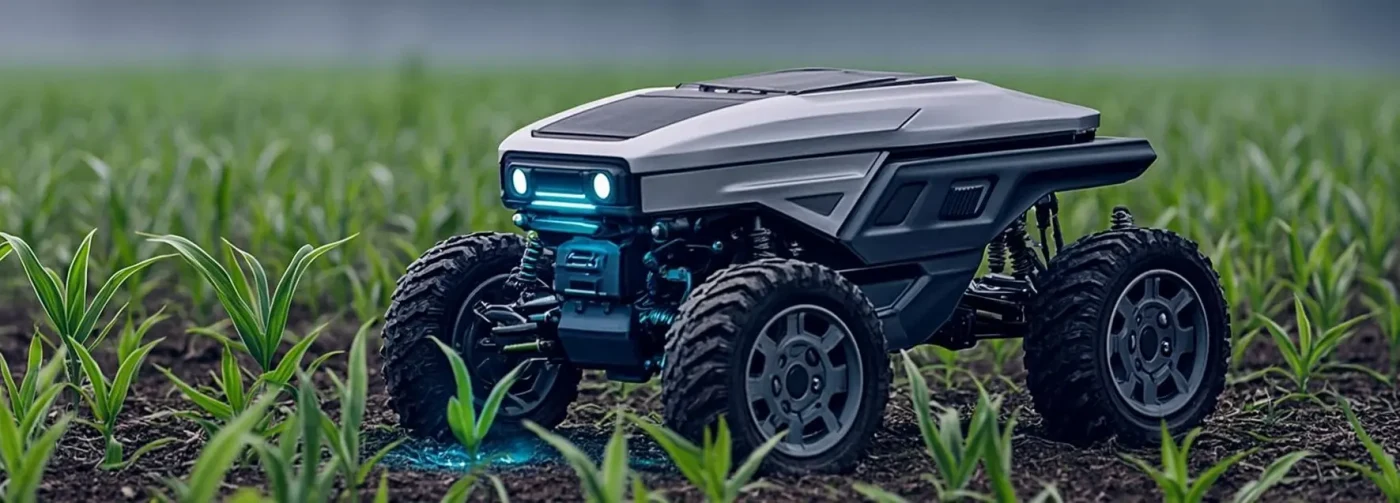
Cornell University students beat out 95 teams to win the top prize at the Farm Robotics Challenge. Their development is an autonomous robot that destroys weeds with electricity.
The invention moves around the vineyard or garden without an operator. It fries weeds with a small shock of electricity, saving labor, energy and preventing crop loss without the use of herbicides.
How the prototype was created
Team leader Andrew James, an agricultural sciences student, worked with agronomists and engineers to examine existing electric weeding technologies. Over four intense months, they developed their low-power system and assembled a working prototype.
Future bioengineer Natalya Kurts admits that she hardly slept at night. “There were fears - what if all this was in vain?”
Victory and startup
James and his co-founders are using the $50,000 they won to create Rootline Robotics. The money was provided by agritech firm Reservoir. She will also host the startup in her incubator in Sonoma, California.
“I've always wanted to build an agri-robotics startup,” says James. “After winning the competition and the support we received from so many industry players, it was the most logical decision to continue.”
Weed problem
Weeds are a real headache for gardens and vineyards. They steal water and nutrients, especially in the spring, explains Steve Selin, owner of South Hill Cider in Ithaca.
“The weeds are very strong, the grass grows close to the trees - we just can’t afford as many trimmers or mulch as we need,” he says. “If the trees are too stressed, they simply drop their fruit.”
Organic farmers typically control weeds with trimmers, mowers, and mulching. All this requires a lot of manual labor. Current electric weeders require an operator, use a lot of energy and cost an average of $150,000—a unaffordable amount for most farmers, James said.
Celine advised the students as they developed the robot and says he can't wait to try out Rootline's new technology.
“If in May-June you can suppress the weeds so that they do not interfere with the trees, then you don’t have to worry about it until the end of the year,” he reasons. “Let them grow back later - they have benefits: they shade the soil, help microbes, make the ecosystem healthier.”
Robots are an interdisciplinary matter
“Robotics is many different systems in one,” says Kurtz. “By definition, it is interdisciplinary.”
Next, the Rootline team will refine the technology and test it with farmers before introducing it to the market. At the same time, Kurtz and Neiss are finishing their studies.
Neiss believes that the team came together almost by fate. “When different minds come together in the same room, it allows for the most realistic and effective solutions to be found,” he says.