Xpeng introduces a new generation of its Iron humanoid robot
English translation from Unibot. Source published 2025-11-11.
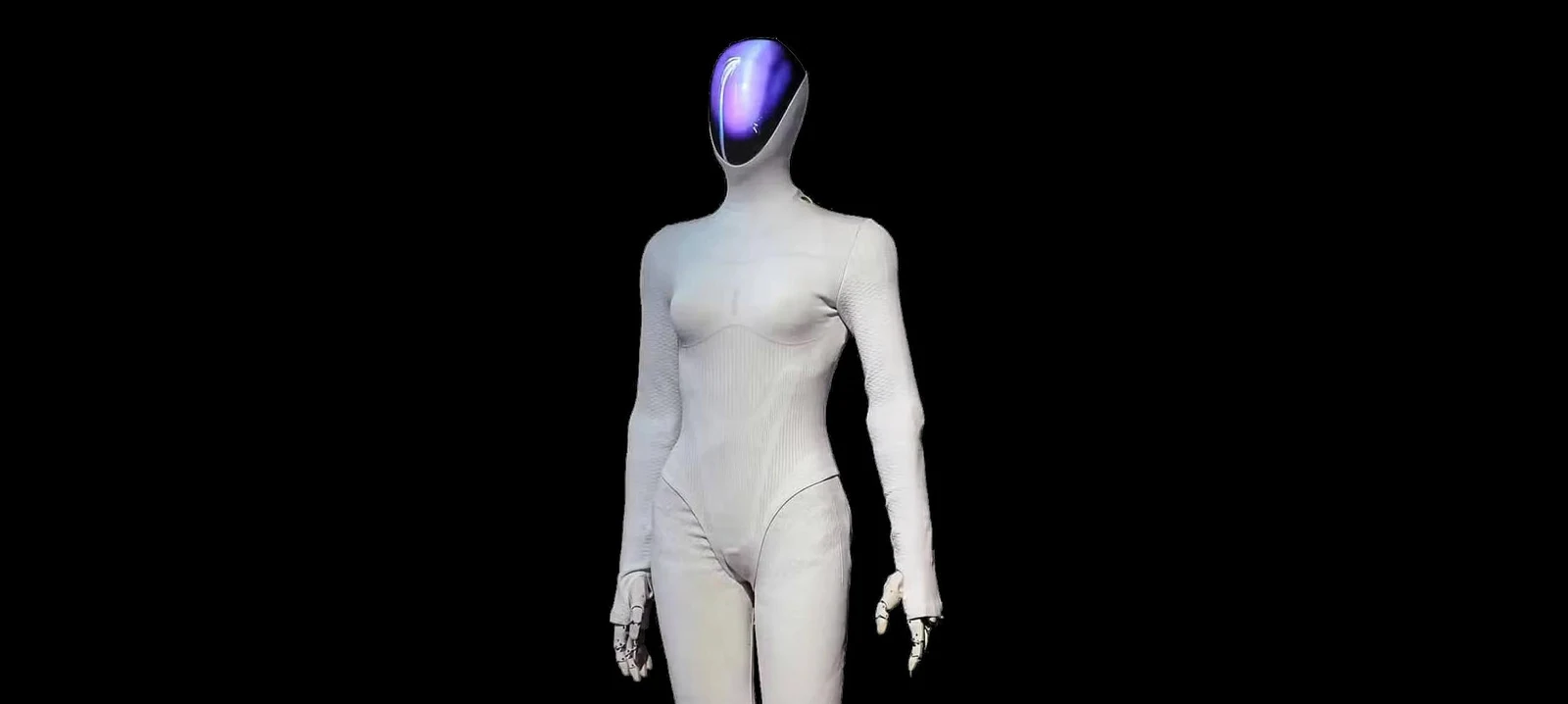
At the annual technology forum Xpeng AI Day 2025, a presentation of an updated version of the android robot Iron took place, striking the viewer with the harmony of movements and surprisingly accurate facial expressions, as if a living representative of humanity.
The head of the company, He Xiaopeng, noted that specialists were able to achieve such a relaxed and elegant gait by introducing an additional degree of freedom in the tips of the toes.
Originally debuted in November last year, the first version of Iron had similar proportions and structure, reaching a height of 178 cm and a weight of 70 kg, practically in no way inferior to the appearance of an ordinary person.
The second modification made significant progress, gaining an anatomically accurate spinal column, muscles close to living tissue, elasticity of the skin and an intricately designed facial display with a convex 3D effect that allows you to literally look into the eyes of the robot. It is noteworthy that the new brush has an unprecedented 22 degrees of freedom, providing exceptionally fine manipulations.
The second version of the unique Xpeng Vision-Language-Action (VLA) system, consisting of three powerful specialized Turing chips, the combined performance of which reaches 2250 trillion operations per second (TOPS), is responsible for the performance.
These digital brains allow the Iron robot to understand human speech, masterfully navigate in space, and even make contact with people, while remaining extremely polite and neat.
The Iron is powered by a revolutionary solid-state battery with unprecedented energy density, light weight and absolute safety.
According to Mr. He, the first use of Iron will begin in the commercial sector, where the robot will provide services to customers and will be used in public places, replacing employees where attentiveness and high efficiency are important.
In addition, a software solution has been introduced for the first time - the Software Development Kit (SDK), which allows third-party developers to create unique applications for Iron, complementing its functionality and turning the robot into an even more useful assistant.
China's largest steel manufacturer, Baoshan Iron & Steel (Baosteel), is announcing a collaboration with the Iron project, outlining experiments in using the robot in its production, starting with simple equipment condition monitoring and ending with a gradual transition to independent workshop maintenance.
Thus, Xpeng’s main task is to launch mass production of advanced androids by the beginning of 2027, finally turning the Iron robot into an indispensable employee of the modern world.