Humanoid LimX Luna with 27 degrees of freedom comes to market
English translation from Unibot. Source published 2026-06-01.
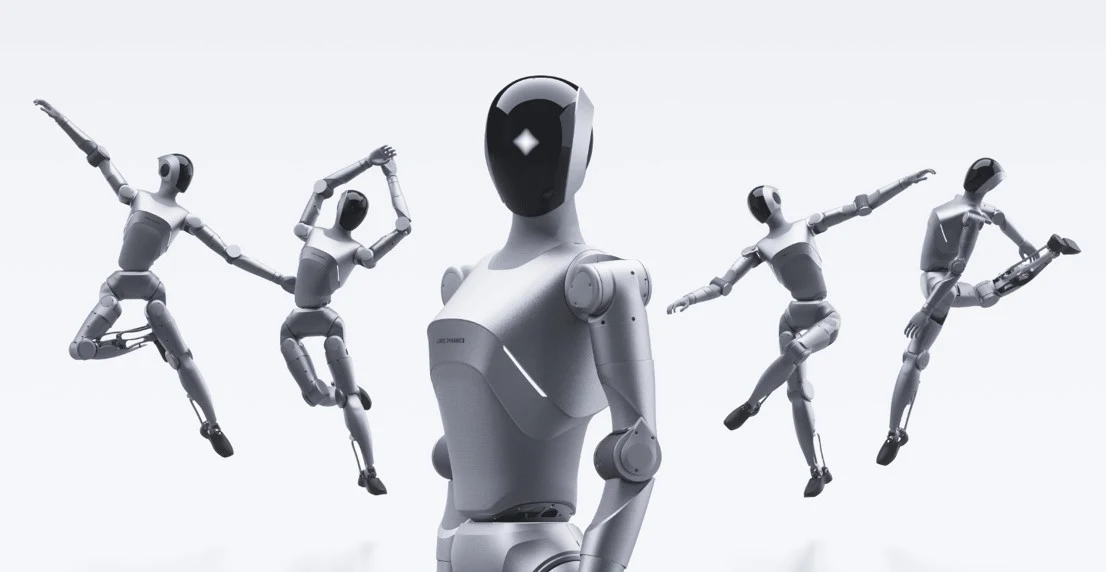
LimX Dynamics introduced the humanoid platform LimX Luna, a full-size bipedal robot aimed at commercial sites and research teams, with a stated launch price of $41,000. According to techeblog.com, Luna combines a 160-centimeter body, 27 active degrees of freedom and a walking speed of up to 5 kilometers per hour, occupying a niche where they try to balance human-like plasticity of movements and lower acquisition costs.
The source describes the Luna as a 54-kilogram platform with a battery installed, and trimmed with textile materials, giving it a less overtly industrial appearance compared to earlier humanoid models. LimX is positioning the robot for use in shopping malls and amusement parks, as well as a more accessible embodied AI platform for research organizations.
From a hardware point of view, Luna is built around 27 active degrees of freedom, distributed across the legs, arms, waist and neck. According to techeblog.com, the robot uses a second-generation motion system with reinforced actuators in the joints, which should improve stability and smoothness when walking and gesturing. The stated maximum walking speed is 5 km/h.
The upper part of the body is designed for light manipulation, and not for heavy industrial work. The arms can carry up to 3 kilograms, although the practical load capacity depends on how the object is held. LimX offers several hand configurations: standard palm, fist, and five-fingered hand, with additional degrees of freedom for tasks that require more dexterity.
Power is provided by a standard battery, designed for approximately four hours of continuous operation. It can be charged in an hour, and the battery is hot-swappable, which is important for sites looking for longer work sessions without extensive downtime. The article also notes that the cooling system has been improved to reduce heat in the joints during prolonged use - a change related to both reliability and safety when interacting with people.
Luna includes multiple levels of control depending on the degree of customization required by the operator. Basic functions are available through a mobile application that connects to the robot, issues simple commands and checks the system status; An alternative control option is a manual remote control. For more advanced use, optional developer tools are available for training, creating choreographies and video simulations.
The software stack also includes the so-called AI task editor, an AI task editor that can collect sequences of actions based on voice or text instructions in English. Such sequences, according to techeblog.com, can combine movement, visuals and audio. For large productions, Luna can synchronize with other units: the paper claims to coordinate up to 200 robots with millisecond accuracy.
The sensing hardware is relatively simple, but is aimed at typical interaction tasks. The robot is equipped with its own six-channel motion sensor and RGB camera, as well as other unspecified means of perception that allow it to monitor the environment and adapt behavior. The source also indicates that there is redundancy and monitoring of the system to monitor joint limits, balance and nearby conditions.
The most obvious use cases for Luna are customer engagement rather than warehouse or factory automation. LimX offers the robot as a tour guide, entertainer, or interactive greeter for shopping malls and amusement parks—areas where the quality of gestures, appearance, and coordination of multiple robots are sometimes more important than brute-force lifting capacity. In this sense, the platform is designed primarily for service and presentation roles.
The reported launch price of $41,000 is one of the notable highlights of the report. The source text suggests that Luna is being positioned as an option for embodied AI research organizations that cannot justify the expense of larger humanoid prototypes. This positioning suggests that LimX is focusing more on accessibility, programmability, and readiness for deployment in presentation scenarios than on extreme power.
What remains unclear from the material is how quickly Luna will move from announcement to widespread field deployment and how many buyers will accept it on an ongoing basis outside of demos and production conditions. The next practical test for the platform will be whether the combination of price, autonomy, synchronized operation and easy manipulation is enough to make the robot useful in everyday commercial and research tasks.