Japan expands pilot projects with humanoid robots in factories and airports
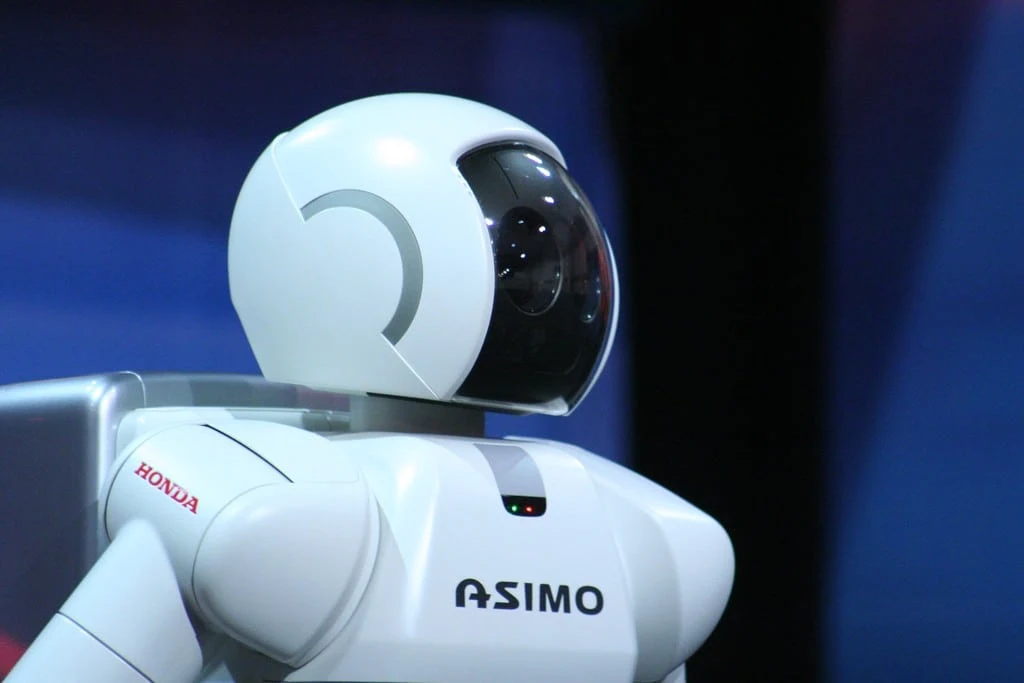
English translation from Unibot. Source published 2026-07-23.
Mitsubishi Motors signed a memorandum with Highlanders, Inc. - a startup from the University of Tokyo that deals with robotics. We are talking about the joint development and production of humanoid robots at the Mitsubishi plant in Kyoto. Intelligent Living writes about this.
Plan for a thousand robots per month
The plan is to produce up to 1000 units per month, and the start is scheduled for 2027. First, the robots will be put on Mitsubishi’s own conveyors, and then they will begin to be sold externally. This is the boldest production statement in Japan's humanoid robot race.
The same selection includes a two-year experiment by Japan Airlines and GMO AI & Robotics at Haneda Airport, Toyota tests on a component line at the Aichi plant, developments for construction from Shimizu Corporation and new humanoid models from Kawasaki Heavy Industries and donut robotics.
The list is replete with pilots, estimates and plans. But this is not yet proof that entire fleets are working. Pressure from the labor market is what drives it.
Why is it urgent
Japan's working-age population fell from 87.3 million in 1995 to 73.7 million in 2024, the source said, citing the Recruit Works Institute. By 2040, the country faces a shortage of 11 million workers. Almost 29.3 percent of Japanese are over 65 years old. In 2024, 686,601 people were born and 1.6 million died.
These numbers explain why humanoid robots are being tested in areas where conventional automation has failed to cope with manual labor.
A Reuters poll cited in the article found that about one in three Japanese people are already using AI robots or are considering doing so. Among transport equipment manufacturers, this figure reaches 80 percent.
Construction remains one of the most difficult areas. The article says: Japan's Ministry of Health reports 6.68 vacancies per applicant in construction and civil engineering. Shimizu is targeting practical applications by FY 2030 for painting, plastering and site inspection. A test has already been carried out in Tokyo: a humanoid robot moved around the site at a speed of 1.0 meters per second, carrying a camera for AI inspection.
What will happen in 2026
In Haneda, JAL and GMO AI & Robotics are testing a humanoid robot based on the Unitree G1. He handles luggage and cleans cabins. The robots work for two to three hours without recharging and are used to move cargo along the platform.
Haneda serves more than 60 million passengers a year - even a limited test on the ground provides operators with valuable data on congestion, charging, control and safety.
In production, Toyota has supplied humanoid robot prototypes to the component line at its Aichi plant. Toyota Research Institute is also working with Boston Dynamics on AI-powered Atlas robots, with a demonstration of object manipulation planned for mid-2026. The plan for Mitsubishi and Highlanders sounds more specific in terms of volumes, but this is still a goal written in the memorandum, and not a report on actual production.
Kawasaki unveiled the Kaleido 9 at the end of 2025. This is a humanoid robot with a height of 180 cm and a weight of 86 kg for industrial tasks - assembly of parts and logistics. It has 41 degrees of freedom, each arm lifts up to 25 kg. On paper, this is a more industrial profile than small service robots, although the article says that development is still underway.
donut robotics has chosen a different path. Its cinnamon mini was shown at SusHi Tech Tokyo - this is a 130-centimeter humanoid robot, which, according to the company, learns movements from video, and not through regular motion capture. They also showed cinnamon 1, a 170-centimeter bipedal robot weighing 70 kg for factories and construction sites. The price for cinnamon 1 was not disclosed.
Physical AI as a Policy
In the article, new systems are combined under the term Physical AI - artificial intelligence that perceives and acts in the physical environment, and does not simply process program data. The stack described above includes computer vision, the vision-language-action model, and motor control.
The practical question is: Can such systems handle non-routine work at useful speeds without constant human intervention?
The Japanese Ministry of Economic Affairs (METI) has already designated Physical AI as a strategic priority. METI intends to build the domestic sector with the goal of capturing 30 percent of the global market by 2040. It has earmarked 90 billion yen a year - about $600 million - for local production of assistive robots. A formal AI and robotics strategy is expected in fiscal year 2026.
Safety regulations will be a deciding factor. The source notes: the current industrial safety system in Japan was written for robots in cages, and not for mobile humanoids who share workshops with people.
The Commerce Department's working group is expected to issue draft recommendations in the second half of 2026. The next specific test is production throughput. Mitsubishi and Highlanders say production could begin as early as 2027, and the stated goal is a thousand units per month.