Insights
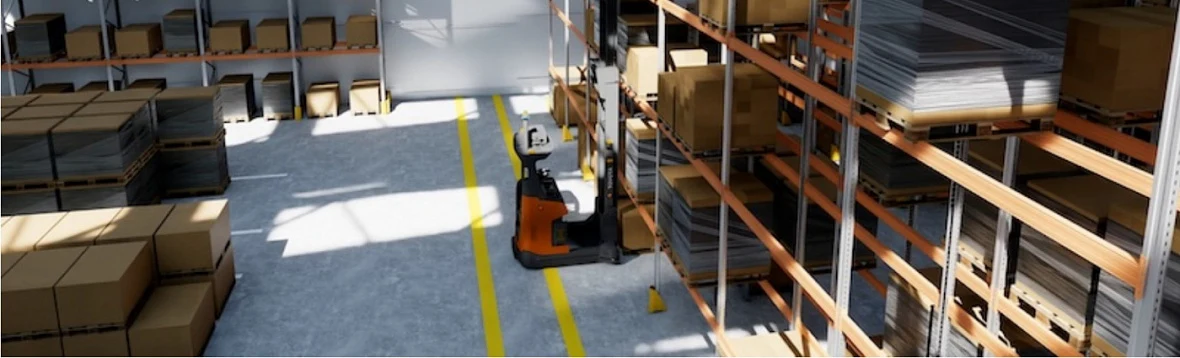
Toyota Material Handling says digital twins cut commissioning time in half for autonomous forklifts
Latest Articles
257 articles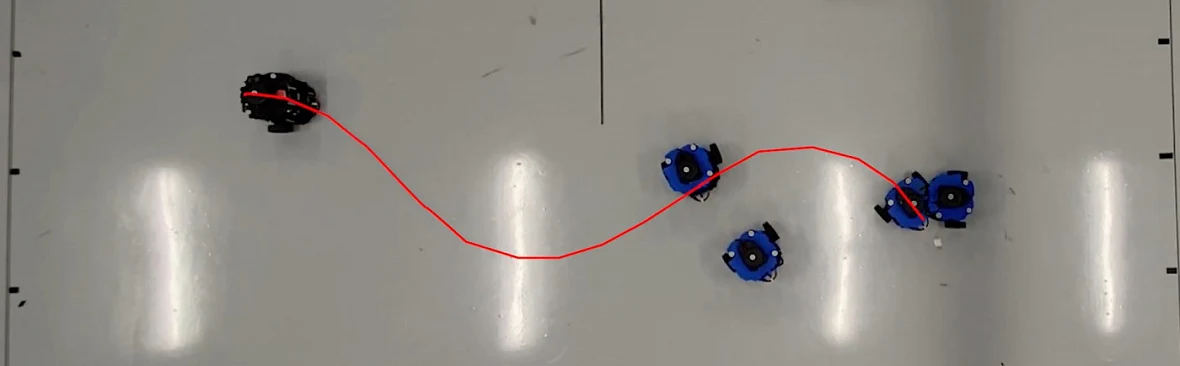
New training method ensures stability of wheeled, flying and six-legged robots
University of Illinois researchers combined reinforcement learning with contraction theory in CARL, a method intended to improve robot tracking while providing stability guarantees. Experiments covered wheeled, flying and six-legged robots, with reported improvements of up to 15% over existing methods. The work also addresses differences between simulation and physical hardware.
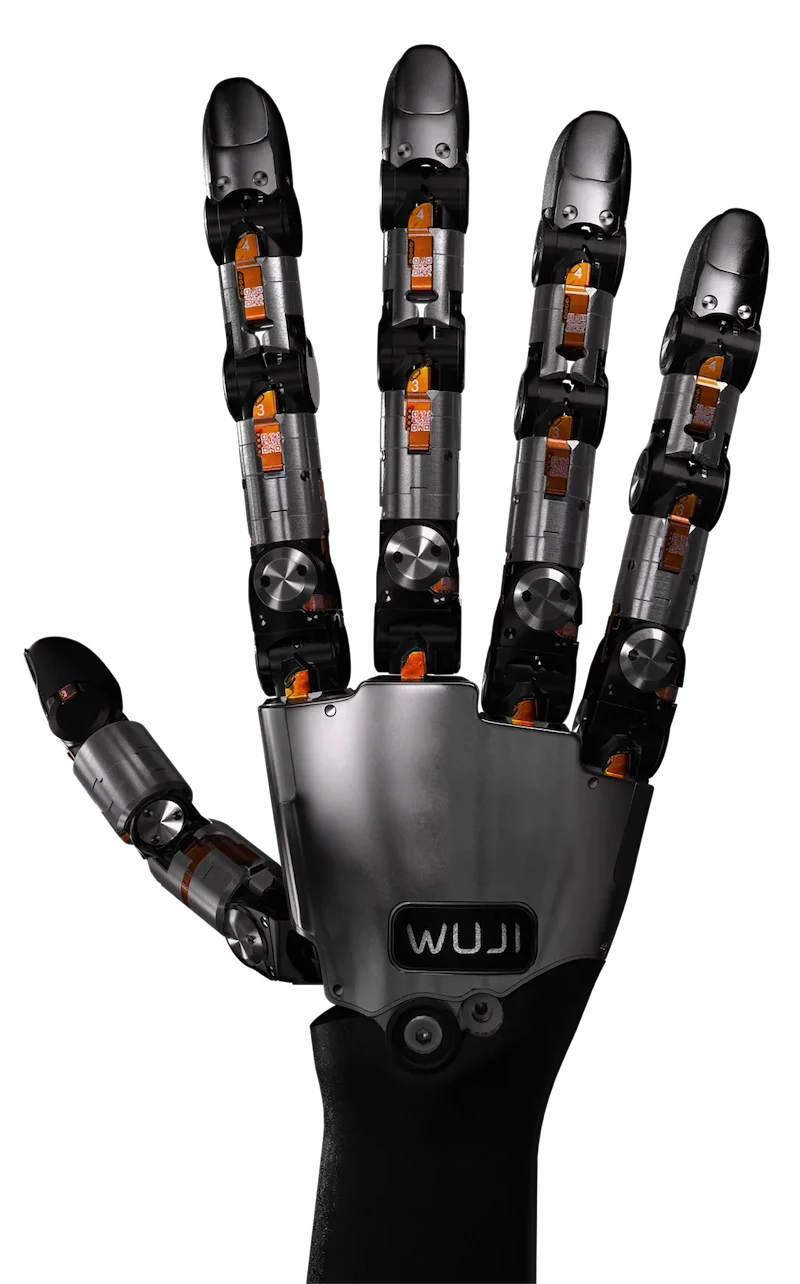
ETH Zurich turned the WUJI robotic hand into a mobile manipulator
ETH Zurich researchers trained a WUJI anthropomorphic hand to move using its fingers, creating a compact mobile manipulator without a separate base. The untethered prototype can crawl, recover after falls and manipulate objects while supporting itself. Reinforcement learning and hardware-calibrated simulation were used to develop its locomotion.
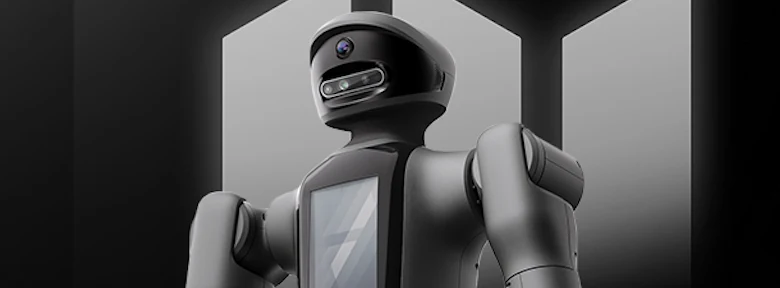
Pudu Robotics enters the semi-humanoid and quadruped robot market
Pudu Robotics presented the PUDU D7 semi-humanoid in Europe at IFA 2026 in Berlin, alongside the quadruped PUDU D5-W and CC1 Pro cleaning robot. Demonstrations covered visitor interaction and mobility. In its September release, the company also reported more than 130,000 robots shipped across over 85 countries and regions.
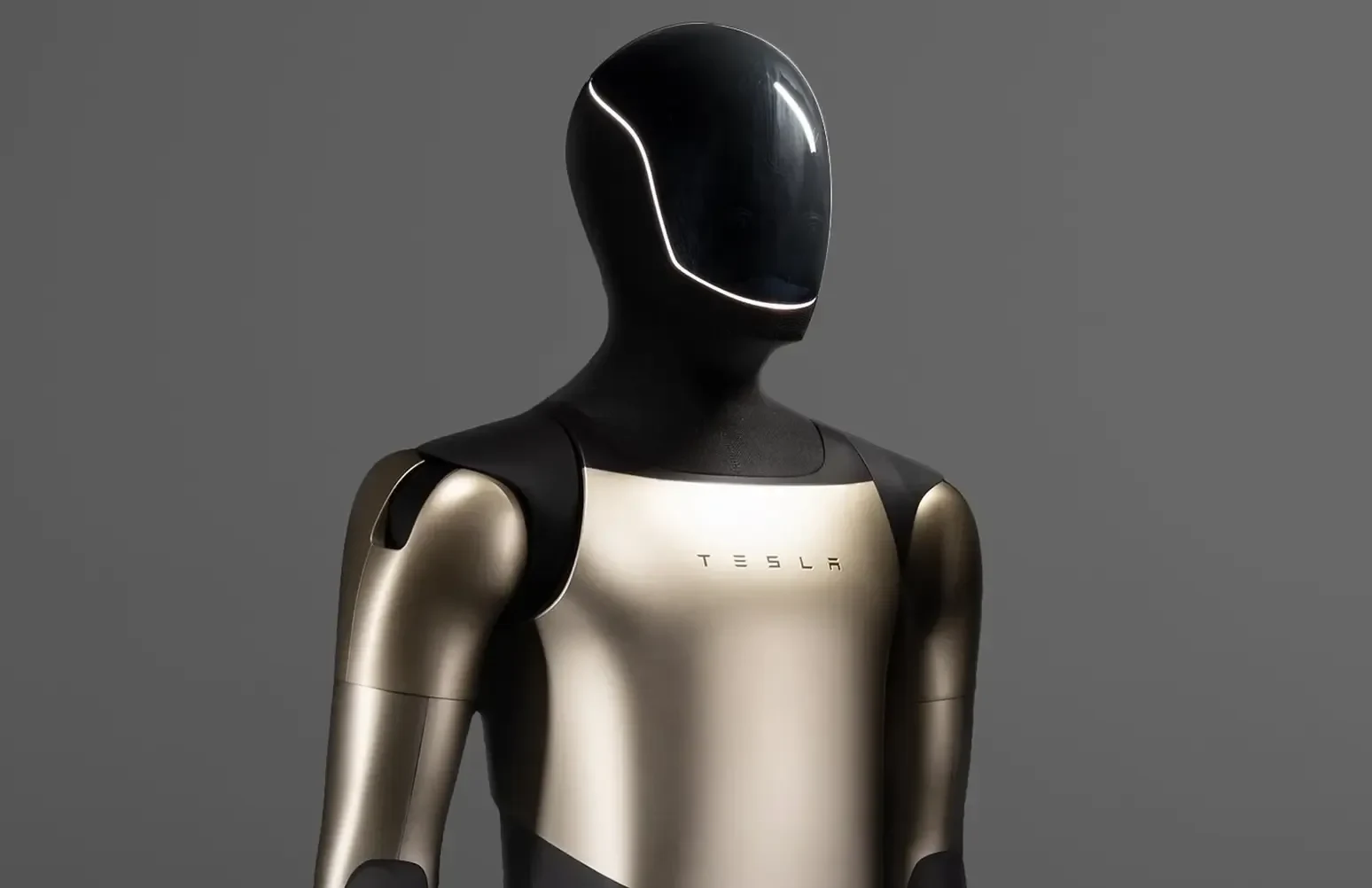
Tesla begins early Optimus production and targets external deliveries for late 2027
Tesla reported early Optimus production on assembly lines in Fremont, while deliveries to external companies are not expected until late 2027. The company did not disclose production volumes, model versions or prices. The article distinguishes line capacity, cumulative production and actual customer deliveries when assessing humanoid manufacturing announcements.
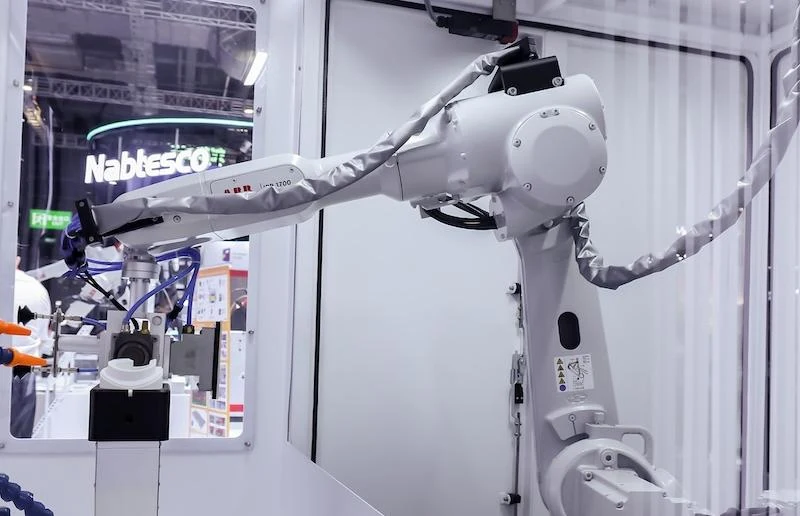
ABB Robotics introduced two industrial robots IRB 1700 and IRB 1700ID
ABB Robotics introduced the compact IRB 1700 and IRB 1700ID industrial robot families with payloads from 6 to 12 kg. The company reports cycle times up to 20% shorter, energy consumption up to 15% lower and oil-change intervals of 20,000 hours. Integrated routing in the ID model simplifies installation.
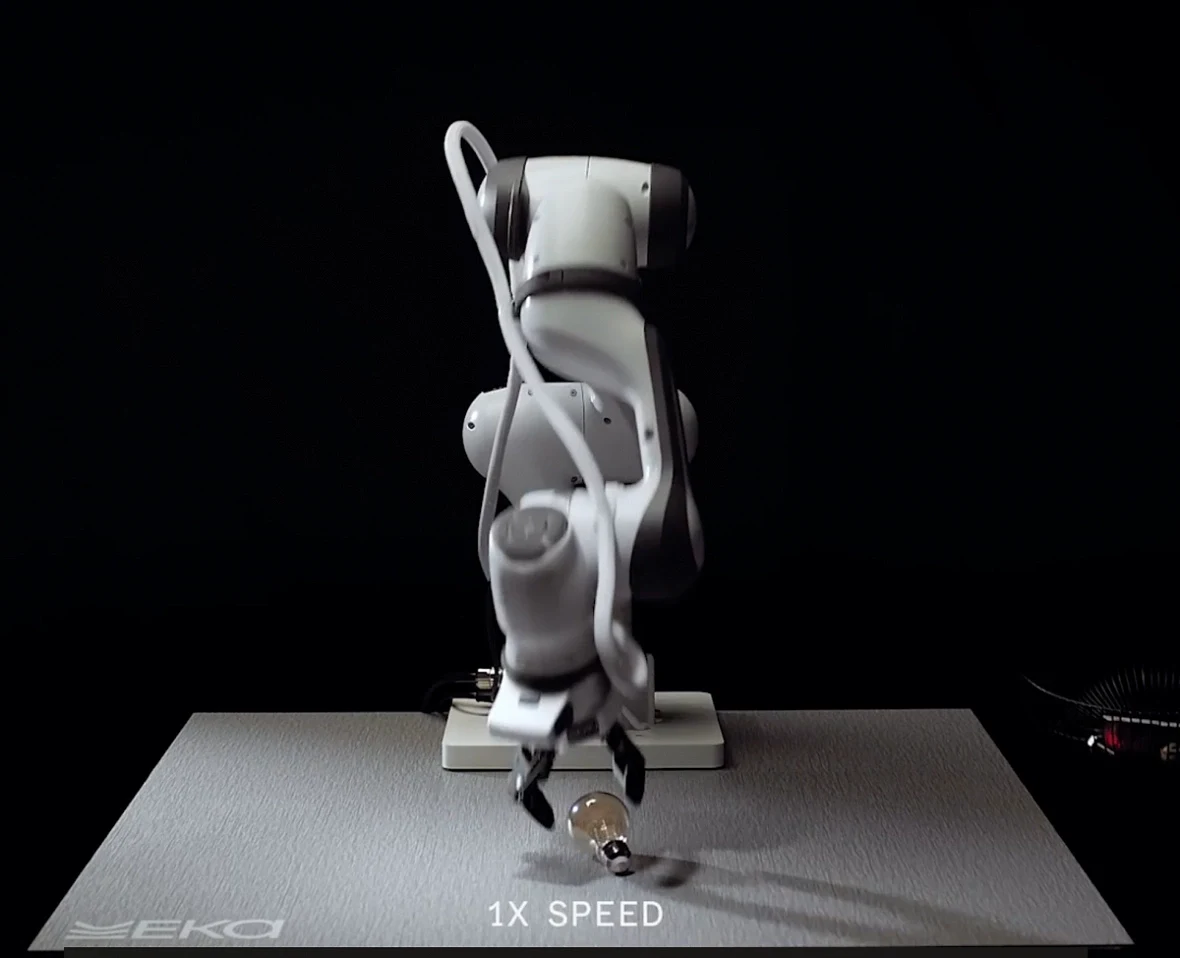
Eka Robotics valued at $1.45 billion thanks to physical AI model
Eka Robotics raised $150 million in Series A funding at a $1.45 billion post-money valuation to develop force-sensitive robotic manipulation. The company combines a custom gripper with simulation-based reinforcement learning. Reported demonstrations show fast, delicate handling, while industrial pilots still need to establish long-term reliability on real production lines.
An AI system for robots has been developed that predicts the consequences of actions
Seoul National University researchers developed Dynin-Robotics, a unified model combining instructions, visual prediction and robot actions. It achieved an average 78.4% success rate across four real robot manipulation scenarios in the reported comparison. The team plans broader industrial testing and adaptation beyond the predefined conditions used in current experiments.
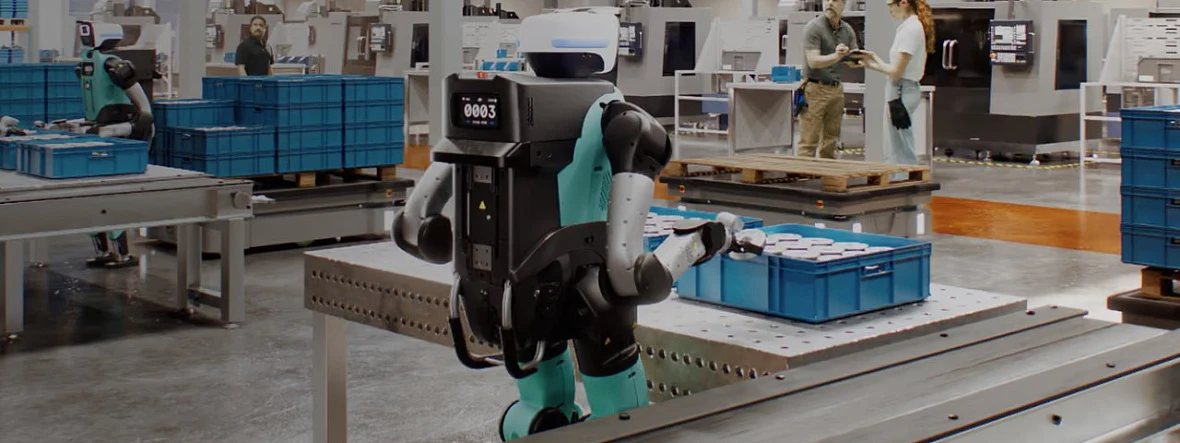
Agility plans nine-minute charging for humanoid robot Digit 5
Agility Robotics plans to use Nyobolt batteries in Digit 5, targeting approximately 90 minutes of operation after nine minutes of charging. Initial customer deliveries are planned for the first half of 2027. The report does not disclose battery cycle life, an important factor for frequent charging and fleet economics.
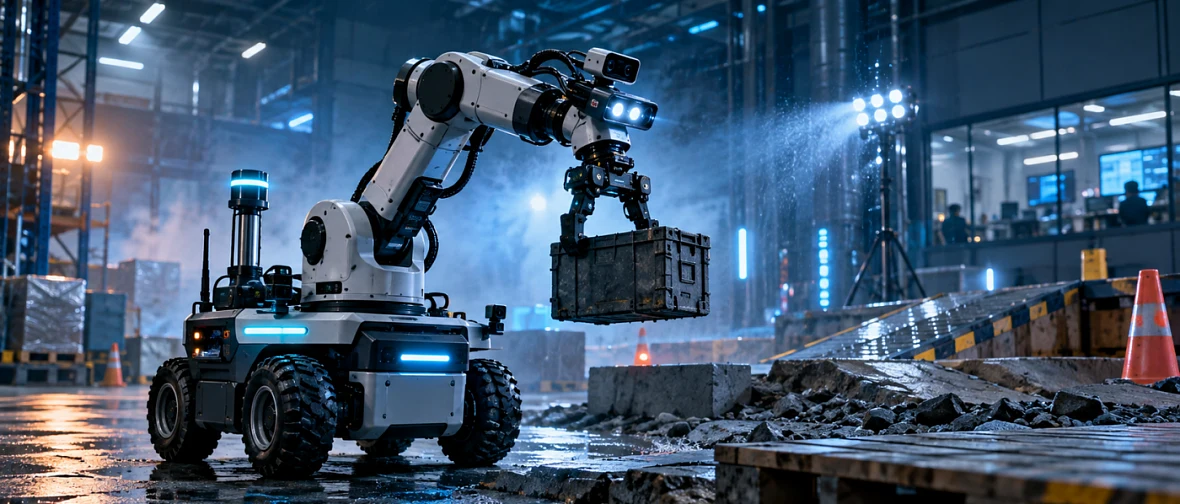
ASTM develops standard to evaluate robot performance in real-world environments
ASTM International is developing draft test method WK100792 to measure how degraded optical information affects manipulators and mobile manipulators. Controlled tests would assess performance under conditions such as changing light, reflective surfaces and interference. The proposed method is intended to help developers and users identify limitations before real-world deployment.

1X Neo named one of TIME's best inventions of 2026
TIME included 1X Technologies' Neo in its best inventions of 2026 list, highlighting its role as a home assistant. The article describes a $20,000 robot and distinguishes lifting from carrying capacity. Household tasks cited by 1X include moving items, organizing surfaces, folding laundry and unloading the dishwasher.

Humanoid robots run and box, but the real test is the laundry
Humanoid sports demonstrations show progress in movement, but laundry presents a broader test of everyday capability. The article explains why deformable fabric, unpredictable homes, error recovery and differences between robot bodies complicate skill transfer. It argues for evaluating reliable task completion and human intervention alongside impressive athletic performances.