Insights
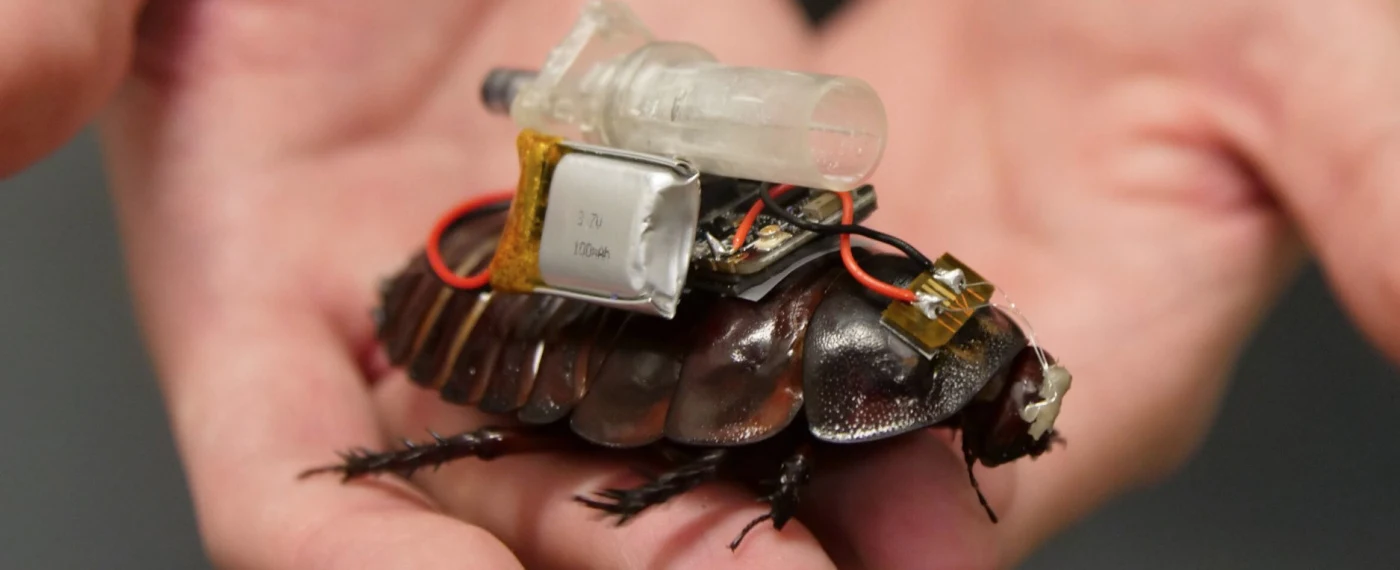
The University of Queensland created cyborg cockroaches to save people
Latest Articles
257 articles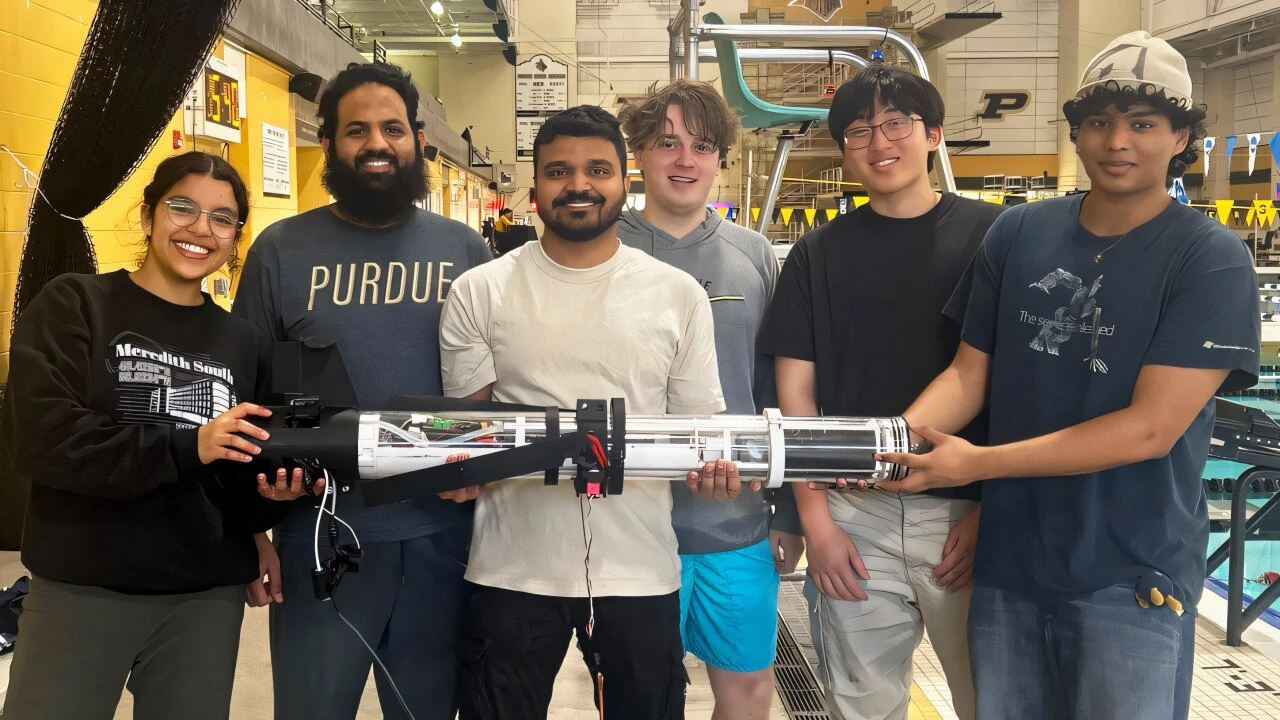
Purdue scientists have created an underwater robot for reliable ocean missions
Purdue University engineers developed an underwater platform combining drifting, buoyancy-driven gliding and powered propulsion. Pool tests verified key subsystems and all three modes, while switching currently remains manual. Future work will measure energy use, maneuverability and reliability and develop autonomous mode selection for longer, more adaptable missions.

Bedrock Robotics launched autonomous excavators without operators
Bedrock Robotics deployed autonomous excavators at infrastructure projects in Texas and Nevada, operating without a person in the cab. The report describes contractor pilots, safety monitoring and plans to retrofit partner machines. The company is also working toward broader tasks and coordinated fleets, with human support retained for exceptions.

Robots and ecology: the community is looking for answers to uncomfortable questions
IEEE RAS-supported projects examine sustainability across robotics design, purchasing, energy use and education. Examples include an Eco-Label assessment tool, selecting appropriately sized collaborative robots, SolarPeer 360 solar systems and a coastal cleanup teaching project. The article argues for considering environmental impact throughout a robot's life cycle.
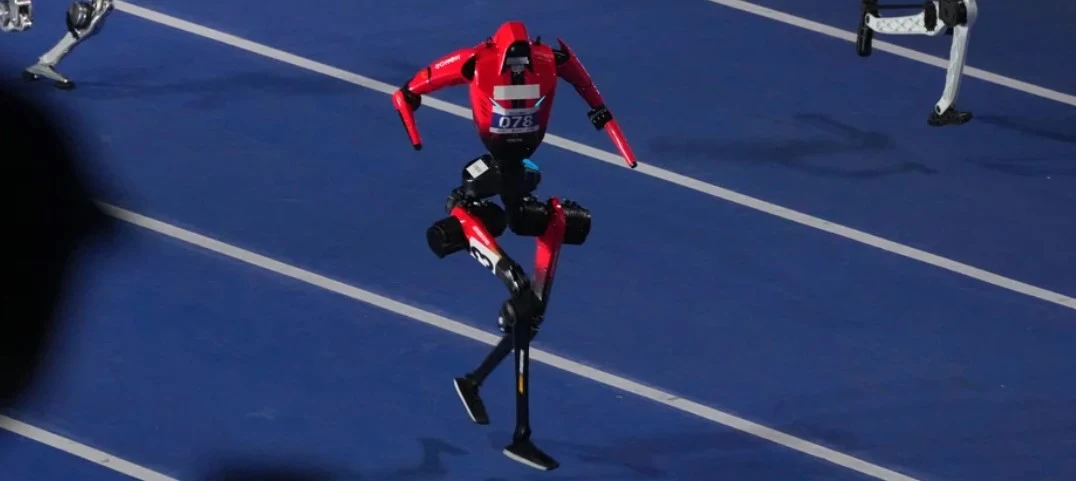
Tiangong Ultra breaks Usain Bolt's 100m record
Tiangong Ultra recorded 9.39 seconds in a 100-meter preliminary heat at the World Humanoid Robot Games, ahead of Honor's Lightning at 9.47 seconds. Both times are below Usain Bolt's record, but differing procedures prevent direct comparison. The report also highlights uncontrolled stopping and incomplete technical disclosures.
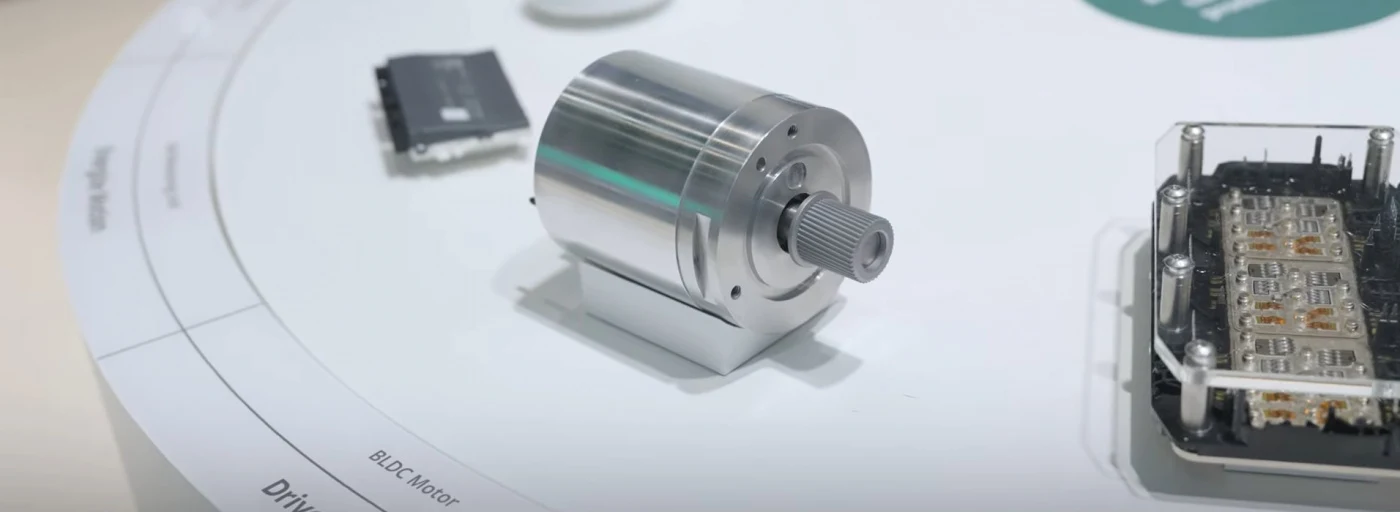
Schaeffler plans to produce gearboxes for humanoids by 2027
Schaeffler completed testing of strain-wave gearboxes for humanoid robots and plans series production from 2027, beginning in Germany. The company reports forming-based manufacturing that reduces cost and material use. Detailed specifications, independent comparisons, first customers and planned capacity remain undisclosed, limiting assessment for particular robot joints.
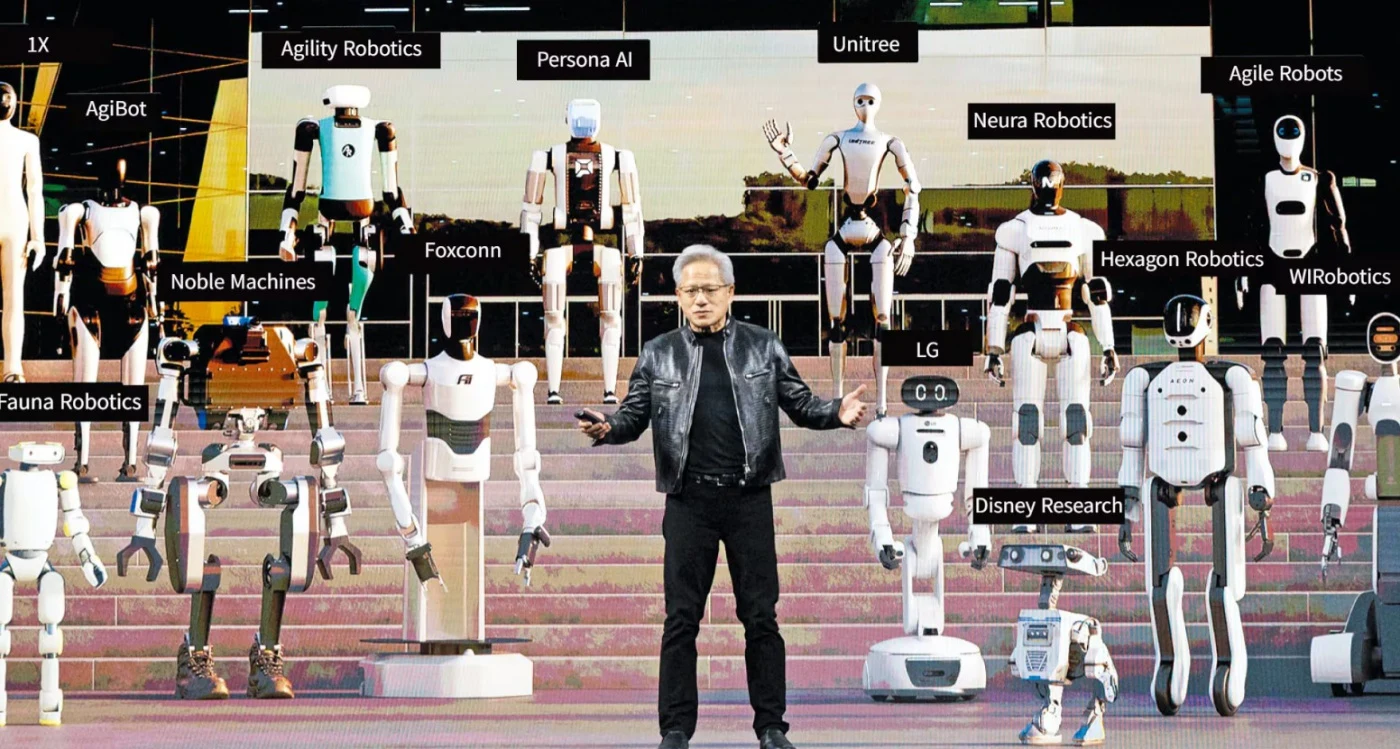
NVIDIA platform powers more than 80% of humanoid robots
Chosun cites ABI Research estimating that more than 80% of humanoid robots use NVIDIA's platform. The report covers processors, models and simulation tools, while noting that these represent different kinds of dependency. A detailed breakdown is needed to distinguish operational reliance from use only during development.
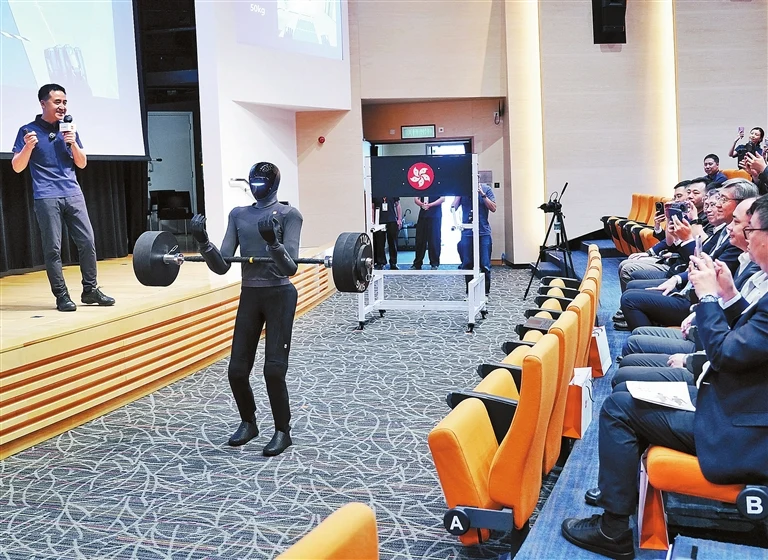
RayNex G3 industrial humanoid targets heavy manufacturing work
NineRay's RayNex G3 is an industrial humanoid with a stated 100 kg deadlift capacity, 80 kg moving carry and eight-hour runtime. The platform combines hybrid actuators with proprietary RayBrain control and whole-body force sensing. Demonstration tasks include stairs, sorting, assembly and dishwasher loading, while skill ratings indicate ongoing development.

Robots acquire new skills from a single video in 29 seconds
Researchers developed HOST, a framework that acquires a new robot skill from one human video at inference time without updating model parameters. Tests on 50 unfamiliar manipulation tasks achieved an average 62% success rate and 29-second acquisition time. The method relies on substantial prior training and retains previously learned skills.

Unitree shares jump 629% in opening minutes of Shanghai debut
Unitree shares rose 629% in the opening minutes of their Shanghai debut and closed 460% above the offer price. The company raised about CNY6.1 billion for robotics research and manufacturing. The report also discusses shipment estimates, revenue and overseas exposure, while analysts emphasize reliability and commercial returns as the next test.

Galbot ET1 humanoid targets factory work
Galbot presented ET1, its first fully bipedal humanoid, as a prototype for mobile industrial tasks. The platform uses NVIDIA Jetson Thor and AstraBrain, with a stated two-hour runtime and $95,000 price. Early navigation and manipulation ratings position it for structured pilots rather than broad, mature deployment.

Bee-inspired algorithm helps robot swarms reach consensus
University of Konstanz-led researchers compared direct switching with cross-inhibition in robot swarm decisions. Adding a temporary uncommitted state helped groups reach clearer, faster consensus when information was unreliable. The Nature Communications study also found that moderate noise could sometimes improve decisions, suggesting principles for more robust collective robotics.